Last updated November 21, 2026
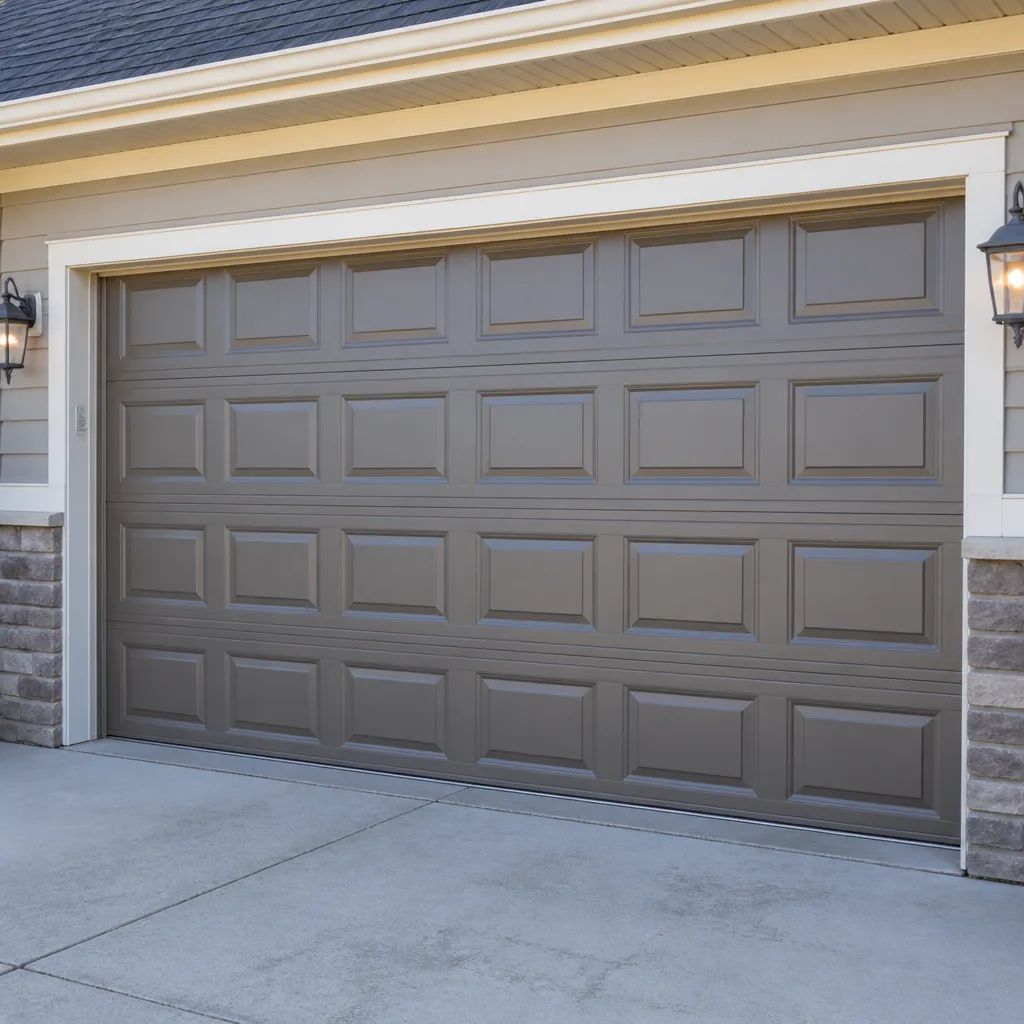 Raised-panel steel
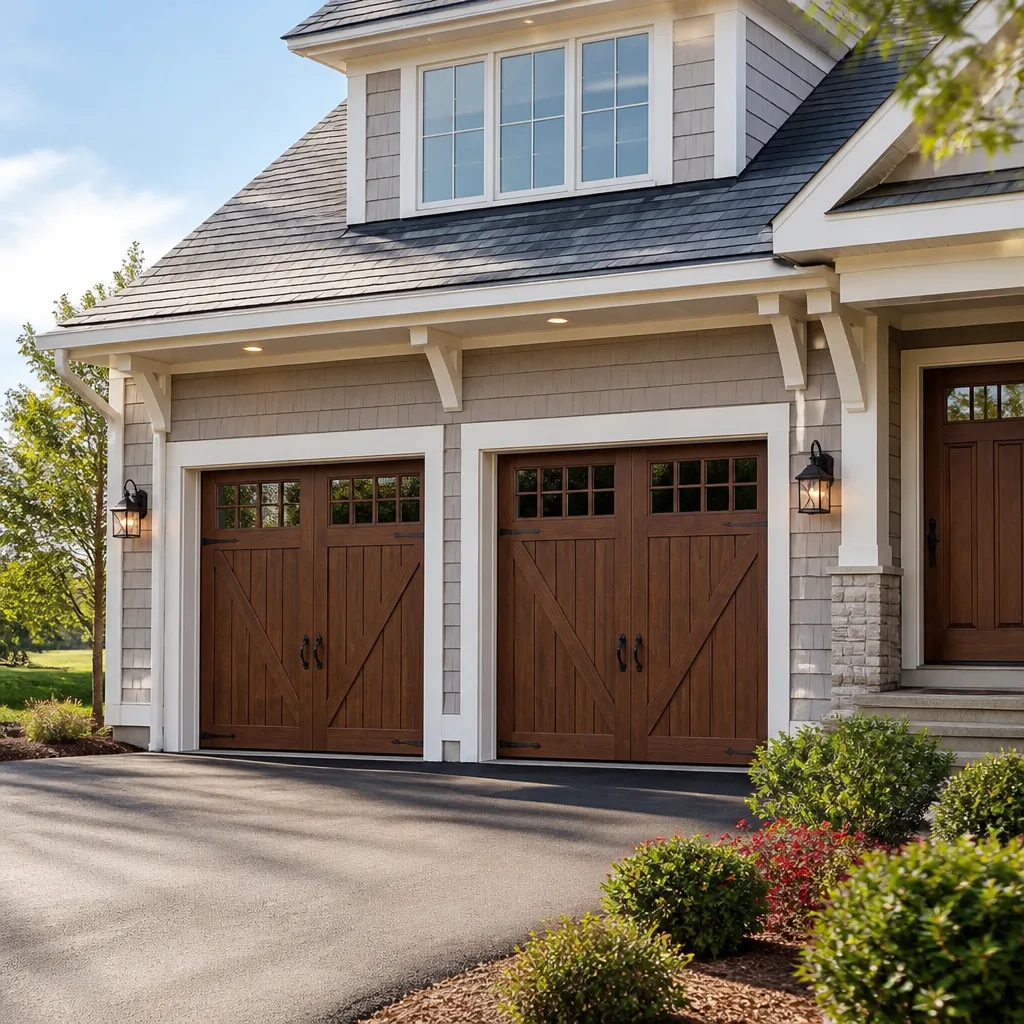 Carriage house
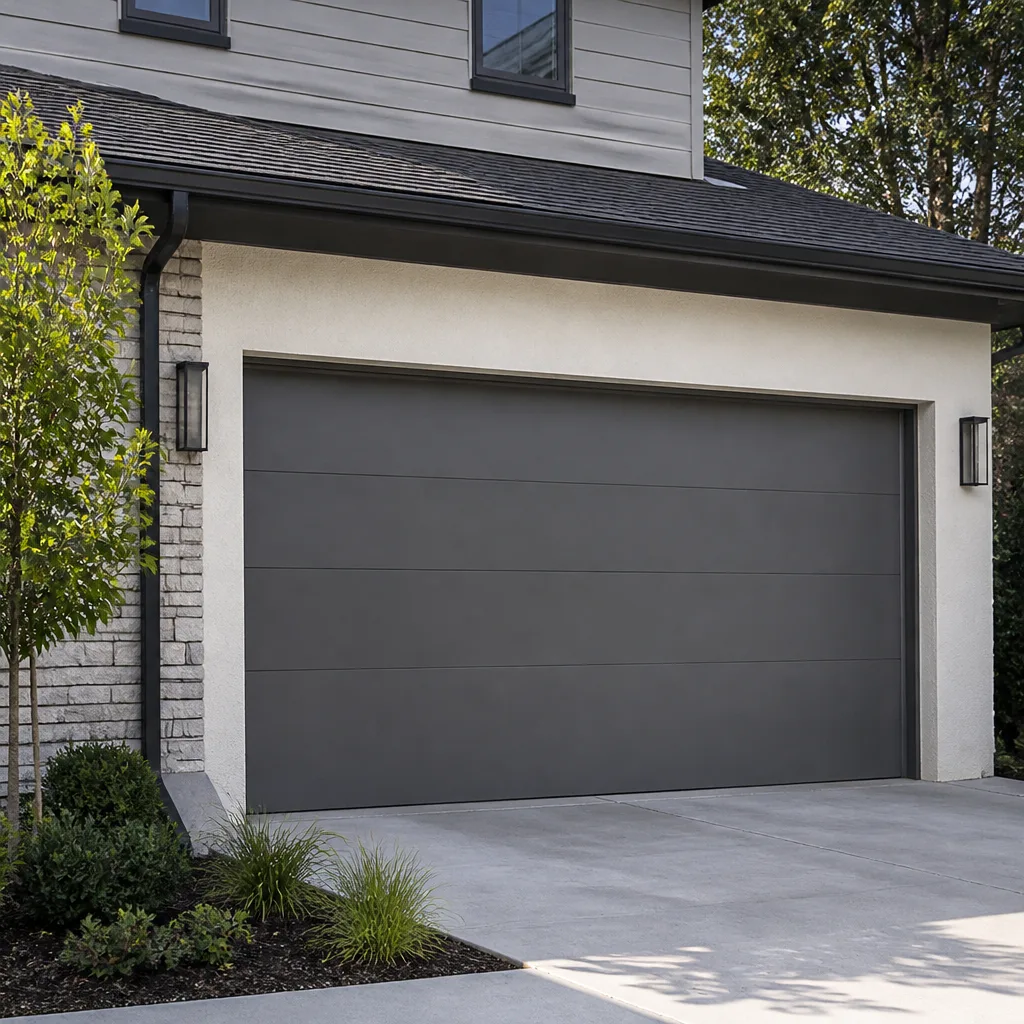 Modern flush
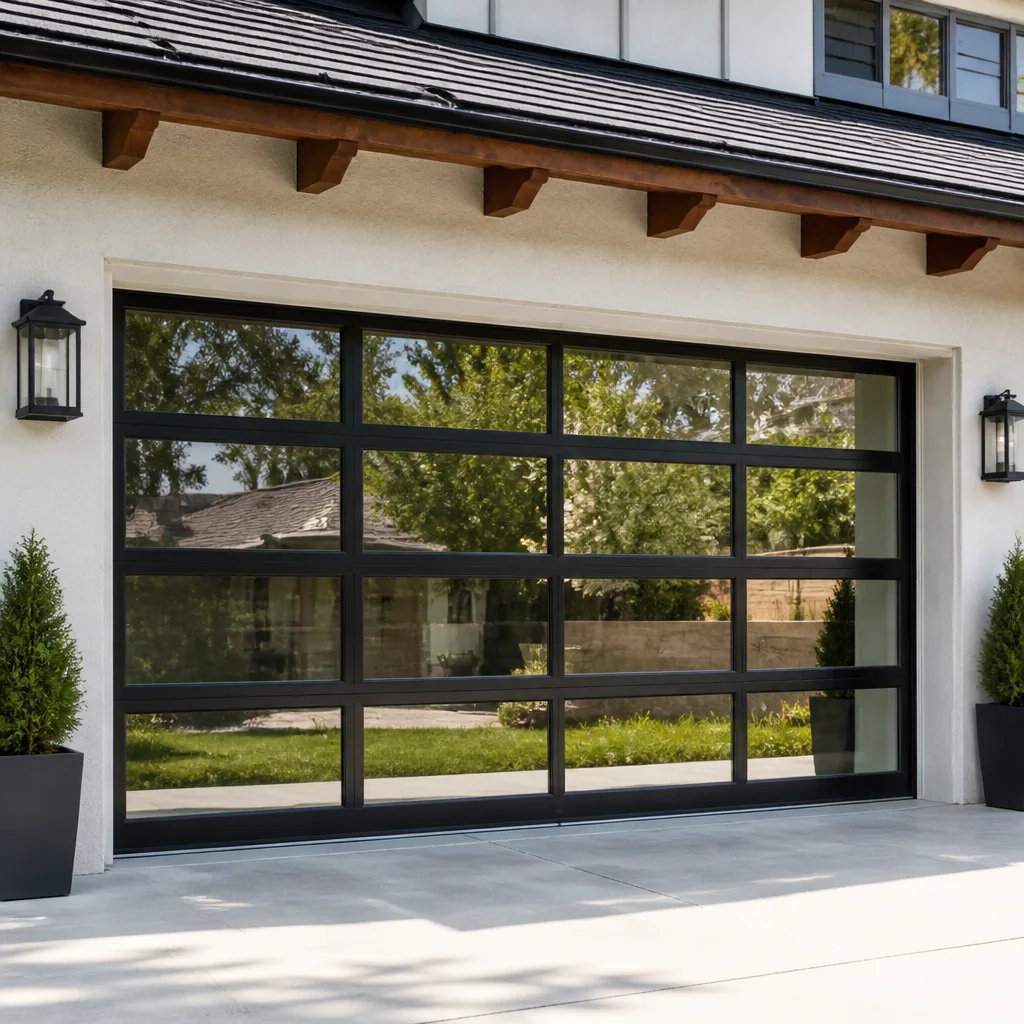 Full-view glass
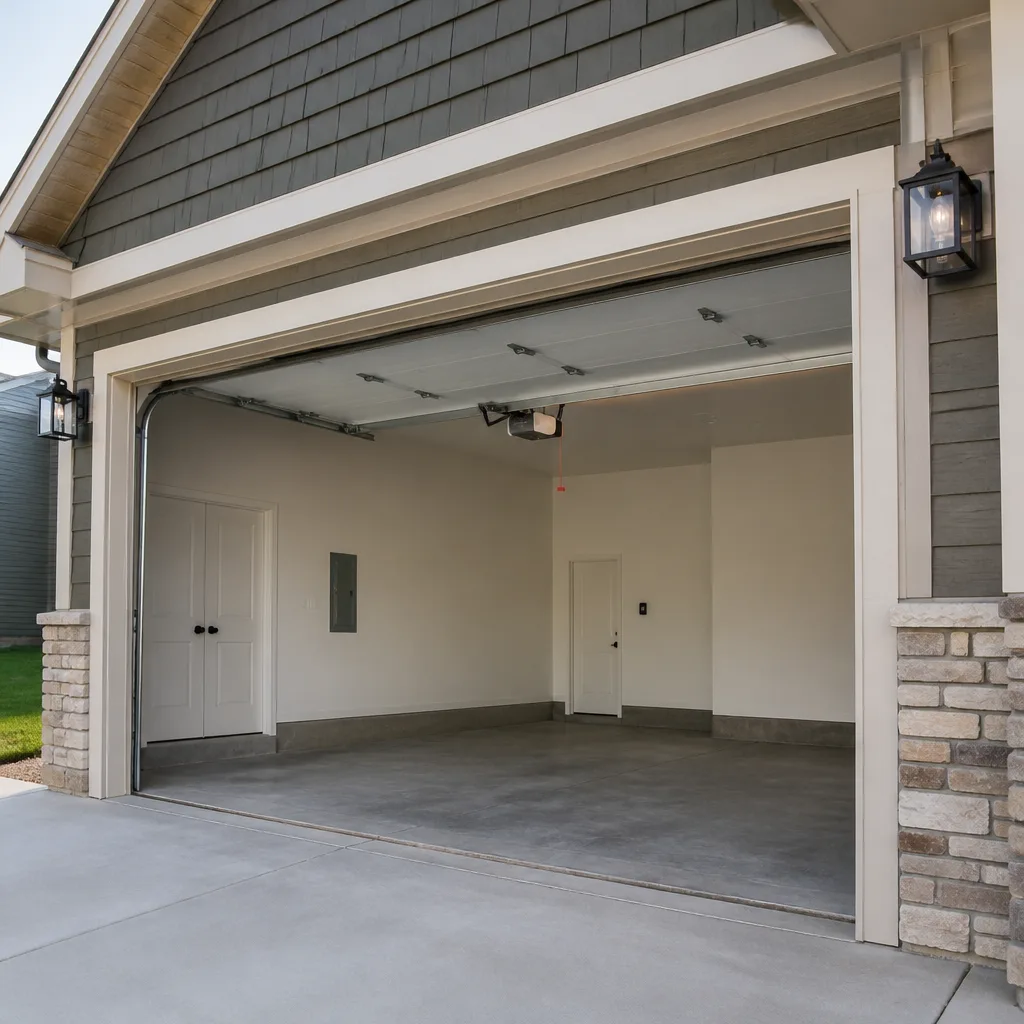 LiftMaster openers
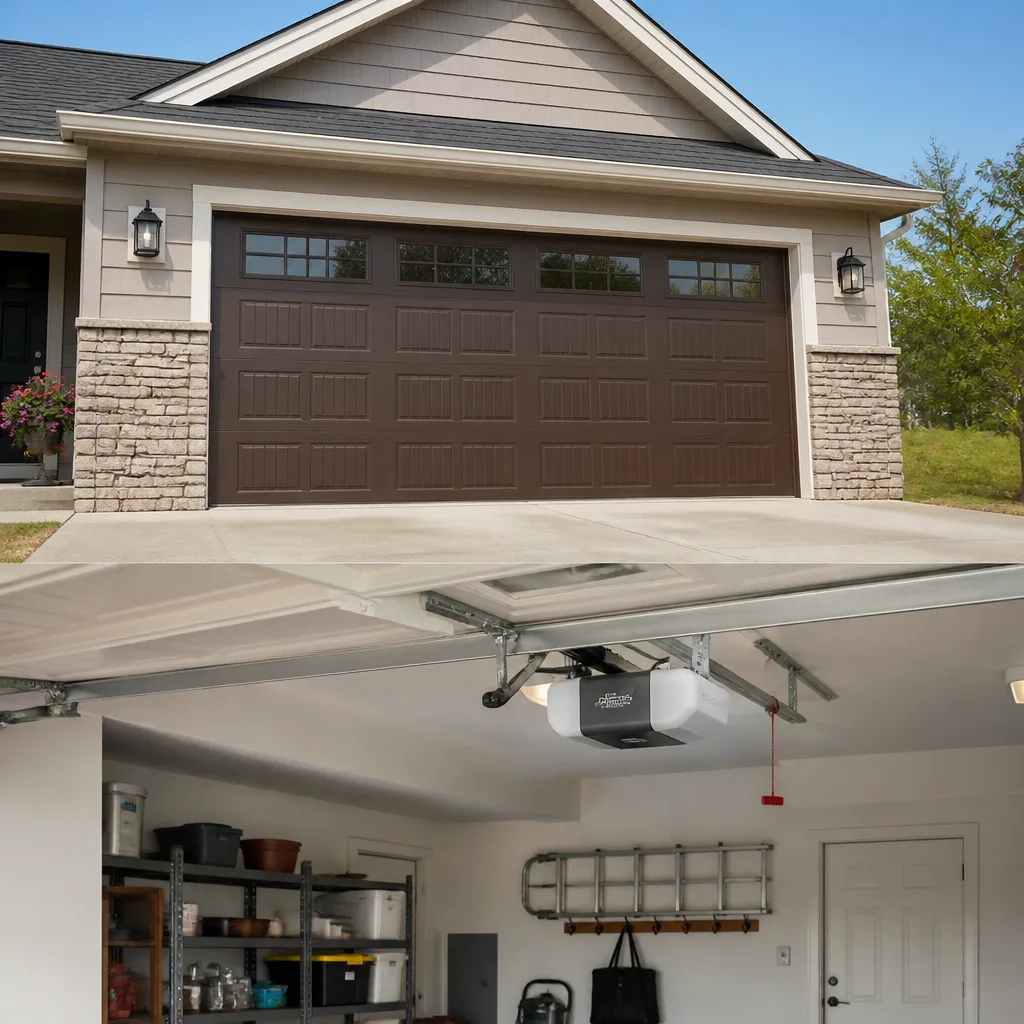 Chamberlain openers
Full 25-point door and opener safety check with every visit - springs, cables, rollers, tracks, and your LiftMaster or Chamberlain opener included
You get a price before we start. It does not change when the pro arrives.
Get your free estimateHow to Hire a Garage Door Contractor in Paterson: A Step-by-Step Guide
Three of the top-ranked “Paterson garage door companies” on Google are lead-generation middlemen. They don’t own a garage door spring. They don’t have a technician on payroll. They pay for the ad or the map placement, take your call, and auction your job to whichever subcontractor will accept the lowest cut. You won’t discover this until someone you’ve never heard of, driving a truck with no name on it, is standing in your driveway quoting a number you can’t verify.
That’s the part most hiring guides skip. This one doesn’t. What follows is a screening process built to filter for accountability rather than price: how to spot an aggregator before you call, what to ask that separates a garage door technician from a general handyman with a price sheet, what a legitimate written estimate contains, and how to verify a New Jersey contractor’s registration in about a minute. Paterson homeowners deal with a crowded, noisy market for this trade, and a little method goes a long way.
Quick Answer
To hire a garage door contractor in Paterson, verify the company’s New Jersey contractor registration through the state’s Division of Consumer Affairs, confirm the crew actually works on garage doors and not just “doors,” ask what brand-specific parts they carry for your opener, and insist on a written estimate with line-item pricing before any work begins. A legitimate local company will pass all four checks without hesitation; a lead-gen outfit or a storm-chaser will stumble on at least one.
Styles & brands we work with
- Raised-panel steel
- Carriage house
- Modern flush
- Full-view glass
- LiftMaster openers
- Chamberlain openers
Table of Contents
- How to Spot a Lead-Gen Middleman in Paterson Search Results
- The Questions That Separate a Technician from a Price Sheet
- What a Legitimate Written Estimate Should Contain
- New Jersey Contractor Licensing: How to Verify in 60 Seconds
- Reading Reviews for Red Flags: Name Swaps and Relocations
- Why Brand Knowledge Matters on Your Specific Door
- What Paterson Weather Does to Your Door
- The Seven-Step Hiring Process
How to Spot a Lead-Gen Middleman in Paterson Search Results
Lead-generation companies have gotten good at looking local. They buy a domain with a city name, spin up a page that reads like a neighborhood shop, and pay to sit at the top of the map pack. The work itself gets farmed out. Understanding this doesn’t require cynicism, just a few habits of attention.
The first tell is the phone number. A true local shop answers its own line. A lead-gen outfit routes you to a call center, often in another state, where the person on the other end asks for your ZIP code before they ask what’s wrong with your door. If the greeting sounds scripted and the first question is about your address rather than your door, you’re probably talking to a dispatcher, not a technician.
The second tell is the address. Google Business Profiles for these companies often list a street address that turns out to be a mailbox service, a shared office suite, or a residential house with no signage. Cross-check the address on Google Maps street view. If it doesn’t look like a garage door operation, it probably isn’t one.
The third tell is consistency. Search the company name alongside “reviews,” “complaints,” or “scam.” Legitimate shops accumulate a messy but coherent trail. Lead-gen operations leave a thinner, more scattered footprint, often spread across multiple domains with nearly identical copy.
In Paterson, this matters because the door failure is happening right now. A broken spring means the car isn’t leaving the driveway, the kids can’t get to school, and you don’t have an afternoon to sort good actors from bad. Knowing the difference in advance is what lets you make one call and get a real technician instead of a middleman. If you’ve already filtered down to a company you trust, garage door repair is where the actual conversation starts.
The Questions That Separate a Technician from a Price Sheet
A garage door technician should be able to talk about your door the way a mechanic talks about your car. The difference shows up fast in conversation. Here are the questions to ask and what a good answer sounds like. Our technicians have up to 14 years of experience, and in that time the questions below have become the quickest way to tell a specialist from someone who does this on the side.
- “What brand and model is my opener?” A specialist will ask you to read the label on the motor housing, or describe the housing shape. A generalist will say “we’ll figure it out when we get there.” That second answer means you’ll pay an extra trip or an extra hour while they research something they should already know.
- “Are you replacing one spring or both?” The right answer involves a conversation, not a number. Springs on a matched pair typically wear at similar rates, so a good technician will explain the tradeoff between replacing one and replacing the pair. If the answer is a flat “whatever’s broken,” press further.
- “What kind of torsion system is on my door?” Torsion, extension, or a newer low-headroom setup. Any garage door specialist knows the difference and can tell you which one you have from a photo.
- “Do you work on LiftMaster and Chamberlain units directly, or do you replace them?” A repair-first company answers “we work on them.” A sales-first company answers with a quote for a new opener.
- “What’s your NJ contractor registration number?” A legitimate contractor gives it without hesitation. Anyone who deflects, or offers “we’re licensed and insured” with no number, is worth walking away from.
- “Can you see the door today, and if not, when?” Vague answers here are a sign that the crew is being booked through a dispatcher rather than scheduled directly.
Between the second and third question, most homeowners already know whether they’re talking to a specialist. That’s the point. The conversation itself is the screening tool. Companies that handle garage door spring repair routinely will pass easily; companies that mostly do handyman work won’t.
What a Legitimate Written Estimate Should Contain
An estimate is not a price. It’s a document. The difference matters because a verbal number given in the driveway can change by the time the invoice is printed. A proper written estimate has structure, and the structure is a signal of whether the company expects to explain itself or expects to argue with you.
| Line Item | What a Normal Estimate Shows | What an Upsell Play Looks Like |
|---|---|---|
| Parts | Named parts (which spring, which roller, which hinge), quantity, and unit price | Bundled as “hardware kit” with a single total |
| Labor | Either included in the line-item price or shown as a separate, reasonable charge | Labor marked “included” while the parts price is inflated threefold |
| Diagnostic fee | Waived against the repair, or clearly disclosed before arrival | Charged after the fact with no prior mention |
| Safety inspection | Listed as a routine check with the specific components named | Used as a lever to push a full replacement the estimate wasn’t requested for |
| Opener work | Itemized, with the specific symptom being addressed | “Openers run better when new” as a suggested add-on |
| Total | A single bottom line, agreed in writing before any work begins | “Subject to change once we open it up” |
The line items that most often signal an upsell play are these: a full door replacement suggested for a door that only needs a panel, a spring quote for a door that only needs cables, and an opener replacement when the actual problem is a stripped gear or a failing wall switch. In every case, the fix is a conversation, not a purchase. Ask directly: “Is this the minimum needed to make the door work safely?” and listen carefully for the answer.
Every estimate we generate is line-itemed, and the number you agree to before we start is the number you pay. Full stop. If a company refuses to give you a written estimate until after they’ve started, that’s your signal. You can find a full breakdown of what typical pricing looks like on our Paterson Garage Door Repair Co page.
New Jersey Contractor Licensing: How to Verify in 60 Seconds
New Jersey requires home improvement contractors to be registered with the state Division of Consumer Affairs. The registration exists specifically to give you a paper trail if a job goes wrong, and it’s checkable in about a minute through the division’s public database. Homeowners who skip this step are the ones most likely to end up with no recourse after a bad job.
Here’s the verification process, in order:
- Ask for the registration number before the technician arrives. A legitimate contractor recites it or texts it to you without delay.
- Search the state database using the number or the exact business name. Results show registration status and any publicly recorded history.
- Match the name on the database to the name on the estimate. If the estimate says “Paterson Garage Door Repair Co” and the database lookup returns a different entity name, ask why. Sometimes there’s a legitimate DBAs explanation. Sometimes there isn’t.
- Ask about insurance. A registered contractor should carry general liability insurance, and the local pro you work with should be able to confirm coverage on request. The exact policy limits and certificate can be requested before work begins.
- Save the paperwork. Registration number, estimate, and any warranty terms. Good contractors don’t object to this. It signals you’re a serious customer.
Garage door work sits in a gray area in some markets because it can look like “minor home repair,” but the reality is that a torsion spring under load stores enough energy to cause serious injury if it fails during a replacement. New Jersey contractors doing this work should be registered and insured, and you have every right to verify both. When a company hedges on the registration number, don’t push. Just move on to the next call.
Reading Reviews for Red Flags: Name Swaps and Relocations
Review counts are a weak signal on their own. What matters is the pattern. A company with fifty reviews that are all five stars and all clustered on the same three dates is a different animal from a company with thirty mixed reviews scattered across a couple of years.
The specific red flags to look for in Paterson-area reviews:
- Multiple recent reviews mention a different company name than the one on the listing. This is the classic name-swap signal. A contractor changes their business name after enough complaints, and the new listing inherits some of the old reviews or the phone number. Search the phone number itself and see what business names come back.
- The “address” in reviews doesn’t match the address on the listing. If reviewers mention a storefront or shop that’s since vanished, or the suite number changes year to year, the company is relocating to stay ahead of complaints rather than fix them.
- Reviews describe a technician who “showed up from another company.” This is what lead-gen dispatch looks like from the customer’s side. The person who called isn’t the person who arrived, and neither knows the other’s business.
- High-pressure replacement reviews. “They said the whole door needed to go” appears often enough in garage door reviews that it’s worth scanning specifically for it.
- Reviews complain of a quote that changed after the work started. A written estimate can’t prevent every surprise, but it should make the invoice predictable.
None of these patterns is proof on its own. Two or three together is worth a pass. The underlying question you’re asking through all of them is the same one: is this company accountable to its own name, or is it accountable to the last customer who paid? Our brand guideline follows this idea closely. We work on your brand, we fix what’s there, and we’d rather explain a small repair than sell a replacement.
Why Brand Knowledge Matters on Your Specific Door
Garage doors aren’t standardized the way a lot of home hardware is. A LiftMaster opener’s logic board looks nothing like a Genie’s. A Chamberlain wall-mounted unit has different mounting geometry than a traditional ceiling-hung system. Clopay, Amarr, Wayne Dalton, Craftsman, and Raynor doors each handle spring placement, track mounting, and panel attachment differently enough that a technician who doesn’t recognize your brand is opening themselves up to extra research time on your dime.
The practical consequence is time and error rate. A brand-aware technician arrives knowing your specific hardware and can often diagnose over the phone before the truck leaves. A generalist shows up, eyeballs the rig, calls a supplier, and comes back with a parts run. You pay for the second trip, and you pay for the phone calls.
When you’re screening a contractor, ask which brands they work on regularly. Listen for specific model names and symptoms, not a long list. A company that says “we work on LiftMaster, Chamberlain, and Genie openers all the time” and can describe the difference between a LiftMaster logic board failure and a Chamberlain travel-limit problem is a company you want on the phone. A company that says “we work on all brands” and can’t name a specific failure mode isn’t telling you anything.
This is also why garage door opener repair is a distinct conversation from door repair. The opener is an electrical system, not a mechanical one, and diagnosing it correctly requires brand-specific knowledge. Ask the contractor which of the two they’re stronger on. A company that admits one is a specialty and the other is a general capability is more trustworthy than one that claims mastery of everything.
What Paterson Weather Does to Your Door
Paterson’s climate is not gentle on garage doors. Snow loads, freeze-thaw cycling, summer humidity, and cold snaps that drop overnight each do their own kind of damage. Understanding the local patterns helps you screen contractors by what they actually expect to find on your door, not just by what they say on the phone.
Winter is the heavy season for spring failures. Springs are under constant tension; when a cold snap hits, the metal contracts a fraction and the failure stress goes up. A technician who works in Paterson should be able to describe what a cold-weather spring failure sounds like (a loud bang from the garage, usually followed by a door that won’t lift). Summer brings a different set: heat warps panels slightly, cycles the opener motors harder, and finds every weak point in a door that was marginal in the spring.
Rain and humidity drive lubricant breakdown on tracks and rollers. A door that’s been neglected for a couple of seasons can start sticking or squealing in a way that mimics a motor problem when it’s really dry rollers. A technician who knows Paterson will ask about the sound, not just the symptom, and can often tell you whether the fix is a lubrication and adjustment or something bigger.
When a contractor asks what time of year the door started misbehaving, that’s a good sign. When they ask what color the door is, they’re gathering cosmetic facts. When they ask whether the door failed on a cold morning after sitting all night, they’re gathering diagnostic facts. Those questions aren’t random. They map to what actually breaks in this part of New Jersey.
The Seven-Step Hiring Process
String the previous sections together and this is the sequence. Print it, bookmark it, or screenshot it, because when the door fails you won’t want to reconstruct it from memory.
- Check the phone number first. Google the number before you call it. If it returns multiple businesses or a directory listing, you’re probably looking at an aggregator. Move on.
- Confirm the address is real. Street view is your friend. A garage door contractor with a listed address that turns out to be a virtual mailbox is a mismatch.
- Ask for the NJ registration number. Verify it in the state Division of Consumer Affairs database. Match the business name on the estimate to the name on the database.
- Ask the brand questions. What opener is on your door, what door brand, what failure mode. A specialist answers without hesitation. A generalist stalls.
- Request a written estimate before work begins. Line-itemed, with parts named and totals visible. If they won’t provide one, that’s a hard no.
- Get the appointment window and confirm the technician. Not “someone from the team” but “the technician who will actually be at your door.” If they can’t tell you, the company is dispatching through a third party.
- Agree to the price in writing before any spring, cable, or opener work starts. Once the number is agreed and written, the invoice should match it.
This process is not exhaustive. It’s the minimum viable filter. Any company that clears all seven is worth considering, and any company that stumbles on two or more is worth skipping. If you’ve already got a door that needs work and you’d rather skip the screening and just call a company you can verify against this list, we’d welcome the call.
Common Mistakes to Avoid
- Hiring on the first quote without comparison. Two or three written estimates is standard for any home repair over a couple hundred dollars. The market in Paterson is competitive enough that getting a second number takes an hour and is worth the call. Skipping this step is the single most common mistake homeowners make.
- Accepting a verbal quote. A number said in your driveway has no legal weight the moment the technician drives away. Get it in writing. If the company resists, that’s the whole answer.
- Believing “your door needs to be replaced” without a second opinion. A properly maintained door can last many years, and most failures are component-level (springs, rollers, cables, hinges, panels). Full replacement is sometimes the right answer, but it should be explained, not asserted.
- Skipping the registration verification because the reviews look good. Reviews can be bought, aggregated, or inherited from a previous business name. State registration is a public record and can’t be faked without a paper trail. Do the check.
- Letting a generalist touch the torsion system. This is the most dangerous component on the door. Springs and cables are under tension that can injure or kill an untrained person. We treat them with the respect they demand, and so should anyone you hire.
- Not asking for the old parts. A legitimate technician won’t object to leaving the failed spring or cable with you. If they take it away without being asked, they may be trying to keep you from seeing what actually failed.
- Paying in full before the door is tested. Pay the invoice once the door works. Not before. Any company that insists on cash up front, before the repair is verified, is not worth keeping.
See the difference
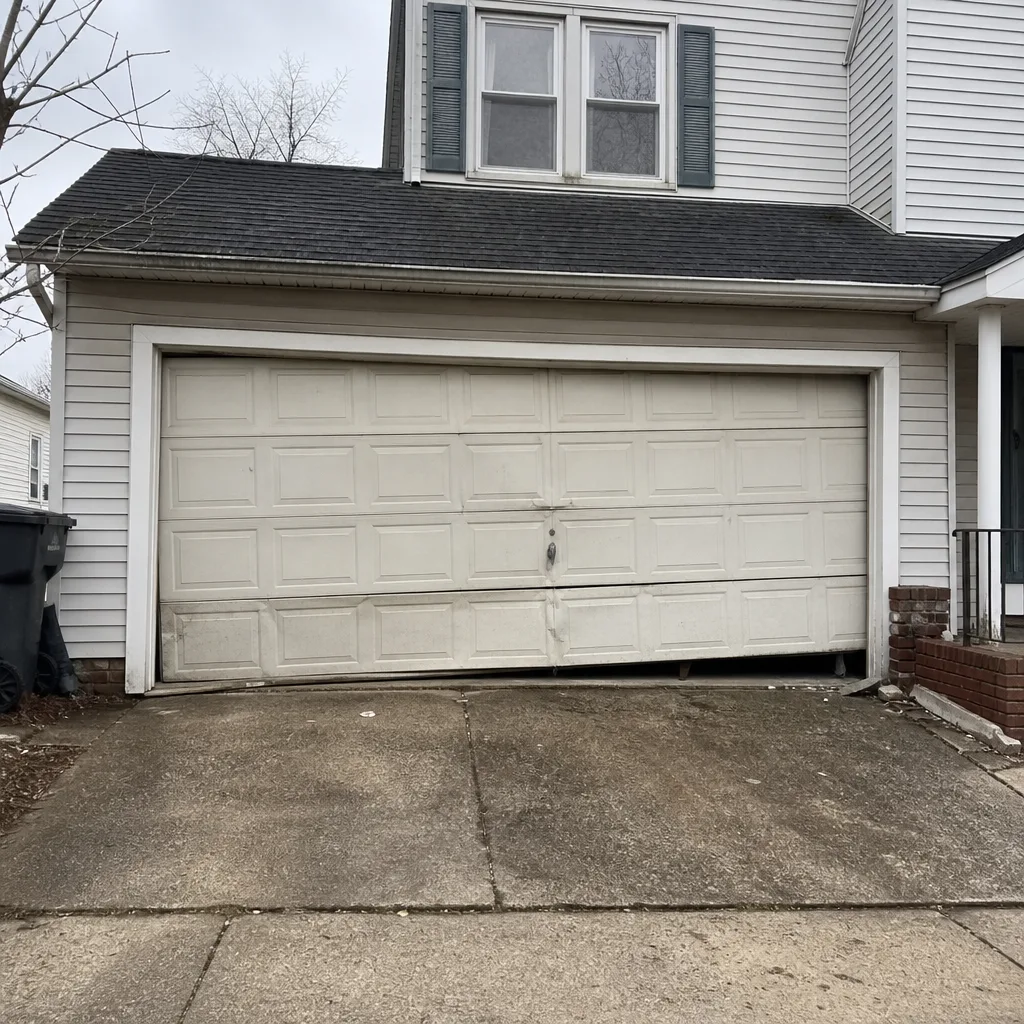 Before
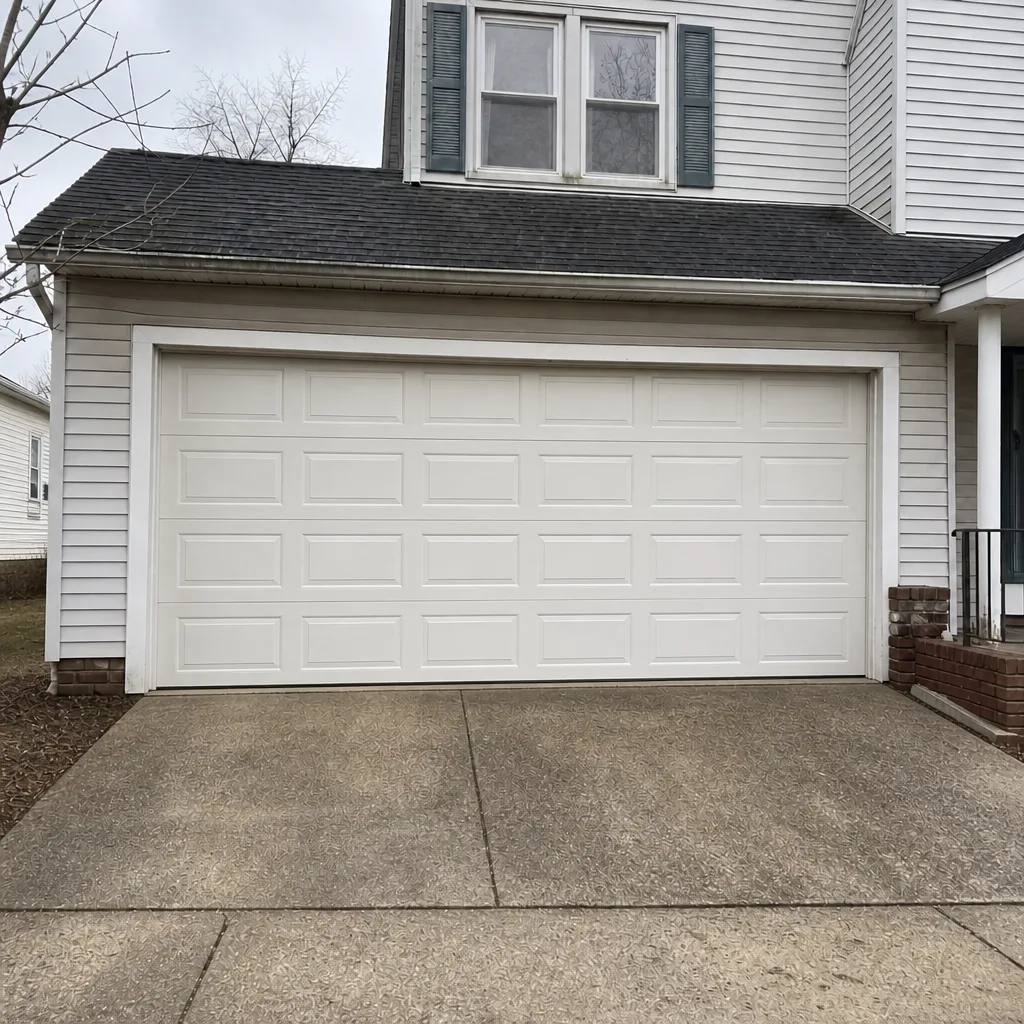 After
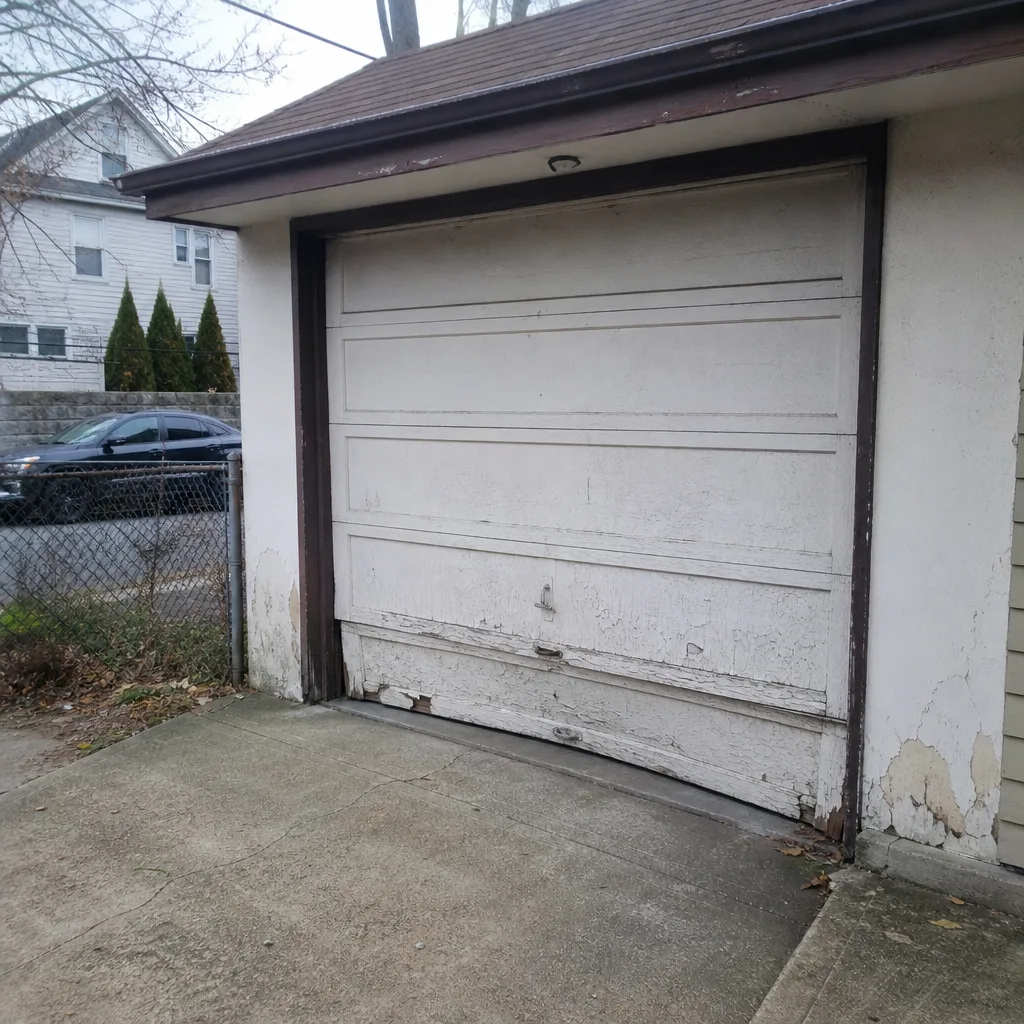 Before
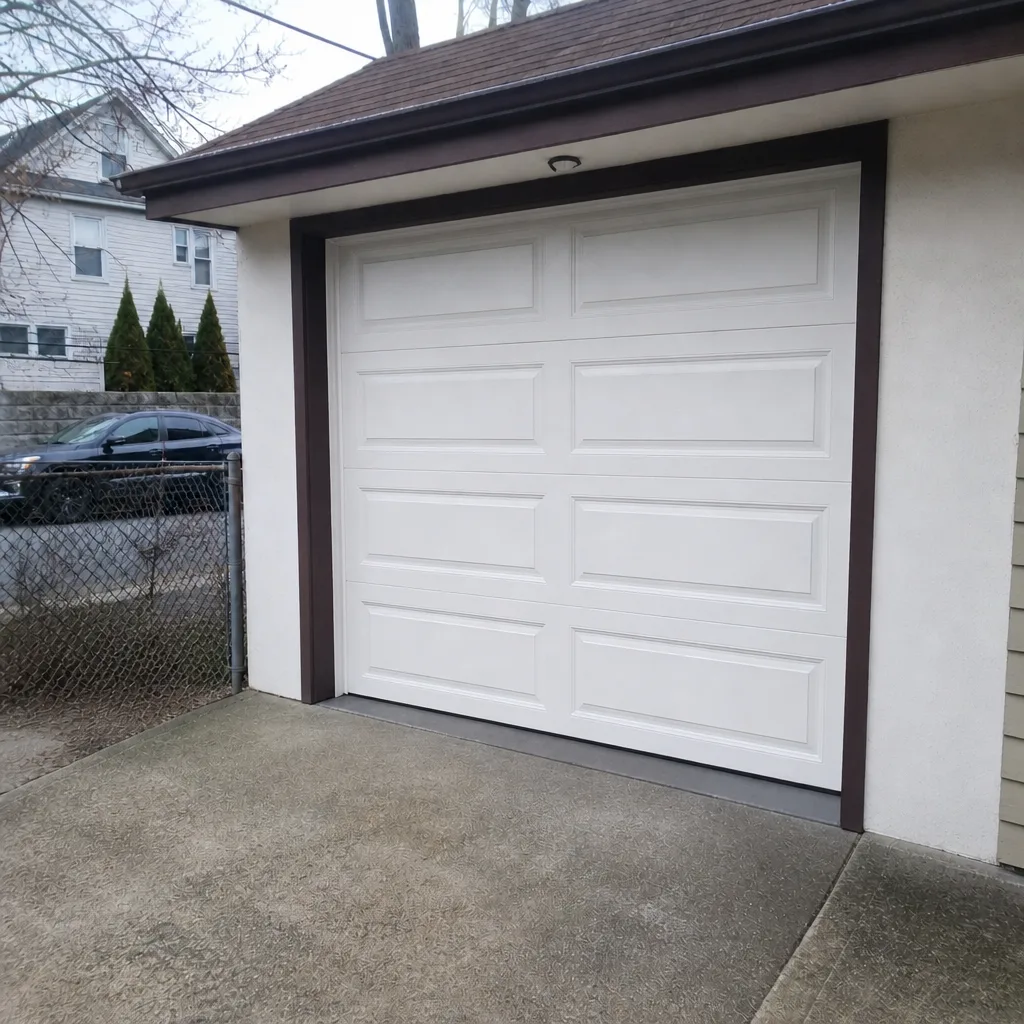 After
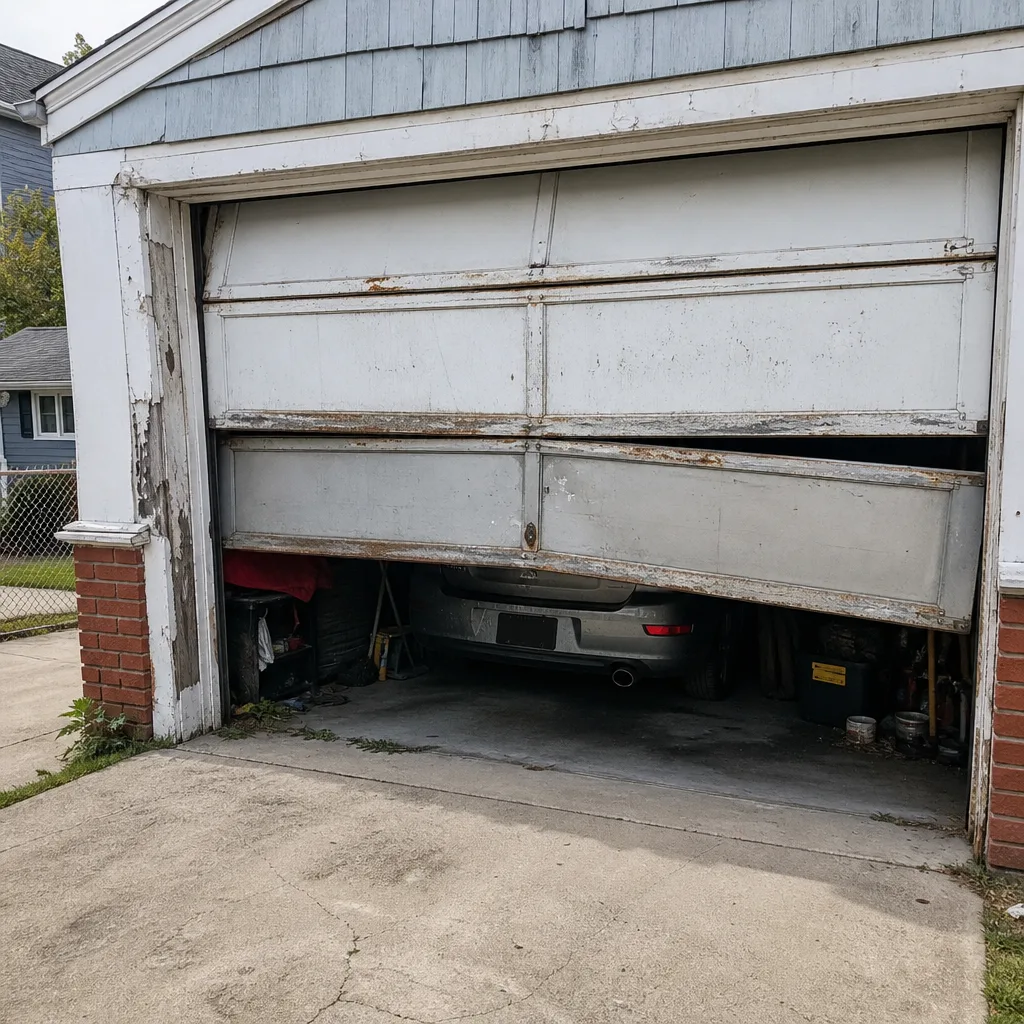 Before
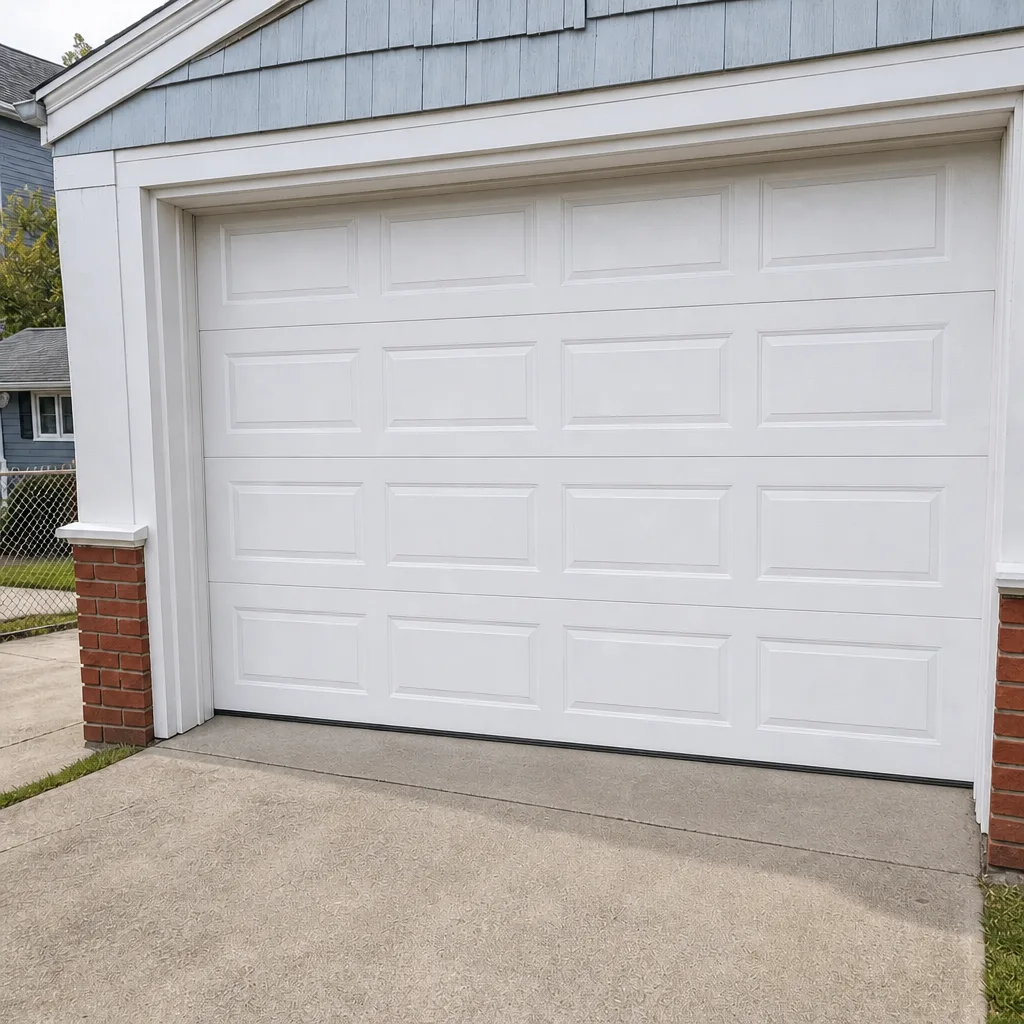 After
When to Call a Professional
Some garage door problems are maintenance. Most aren’t. If the door won’t move, if you hear a loud bang from the garage and the door stops lifting, if the door reverses on its own, if the opener light flashes a fault code you don’t recognize, or if the door visibly tilts to one side as it opens, those are professional calls. Springs and cables especially are not do-it-yourself repairs. The stored energy in a torsion spring under load is enough to cause serious injury, and we won’t walk a homeowner through a spring replacement over the phone. We’ll get a technician out to look at it.
If the door is off its tracks or hanging crooked, don’t run the opener. That’s the other situation where a homeowner can turn a repair into a bigger problem by cycling the motor on a jammed door. Shut it off at the wall and call. Our technicians have up to 14 years of experience and we work on the brands most Paterson doors already have in them: LiftMaster, Chamberlain, Genie, Clopay, Amarr, Wayne Dalton, Craftsman, and Raynor. One call covers both the door and the opener, which is often the point. Paterson Garage Door Repair Co offers free estimates in Paterson. Call (844) 553-2327.
Frequently Asked Questions
Verify three things: their New Jersey home improvement contractor registration through the state Division of Consumer Affairs, their business address on Google Maps street view, and their phone number in a simple search. A legitimate company passes all three; a lead-gen aggregator or a storm-chaser typically fails at least one. If the phone number returns multiple business names or a directory listing, that’s the clearest signal.
A single torsion spring repair in the Paterson market typically runs somewhere in the low-to-mid hundreds, and a matched pair is usually replaced together at roughly twice that. The written estimate is the final number, not the phone quote, and we won’t start work until you’ve agreed to it. Call (844) 553-2327 for an exact number on your door. Estimates are free.
New Jersey requires home improvement contractors to register with the state Division of Consumer Affairs, and garage door work falls under that umbrella in most cases. The registration number is public and checkable through the division’s online database. If a company can’t give you a number immediately, don’t hire them. There’s no legitimate reason to hesitate.
In most cases, yes. Opener failures are often component-level (gear, logic board, travel limits, wall switch), and the diagnosis is usually quick once we know the brand. We carry the common parts and can often handle the repair on a first visit. If it turns out to be a larger issue, we’ll tell you before anything is ordered. Call (844) 553-2327 to talk through the symptom and get an estimate.
No. The written estimate you agree to before work begins is the price, provided the scope of the repair is what was discussed. If we open the door and find something genuinely additional (a cracked panel that wasn’t visible from the driveway, for example), we’ll stop and talk it through with you before touching anything further. The invoice should match what you signed. Any company that doesn’t work this way is worth walking away from.
We’re closed on Saturday. If your door fails on a Saturday, call (844) 553-2327 and we’ll get you on the schedule for Sunday. Emergency spring failures, off-track doors, and doors that won’t close before a coming storm are the situations worth calling about. Don’t cycle the opener on a jammed door while you wait; shut it off at the wall and leave it.
The Bottom Line
Hiring a garage door contractor in Paterson comes down to a handful of checks that most homeowners skip because the moment is urgent. Verify the registration. Verify the address. Ask the brand questions. Get the estimate in writing. Agree to the price before the first spring comes off the winding cone. If you do those five things, you’ll filter out the lead-gen outfits, the storm-chasers, and the generalists who read off a price sheet. You’ll be left with companies that are accountable to their name and can actually do the work on your specific door and opener. For a start on the brand-specific side, garage door opener repair and garage door spring repair are the two services where the difference between a specialist and a generalist shows up fastest.
Contact
When the door won’t move, we’re the call. Paterson Garage Door Repair Co handles repair, opener service, spring replacement, installation, and emergency calls for the brands most Paterson homeowners already have installed: LiftMaster, Chamberlain, Genie, Clopay, Amarr, Wayne Dalton, Craftsman, and Raynor. One call covers the door and the opener. Free estimates are available, and the price you agree to before work begins is the price you pay. Call (844) 553-2327 for a free estimate on your door today.
Written by the team at Paterson Garage Door Repair Co.