Last updated November 21, 2026
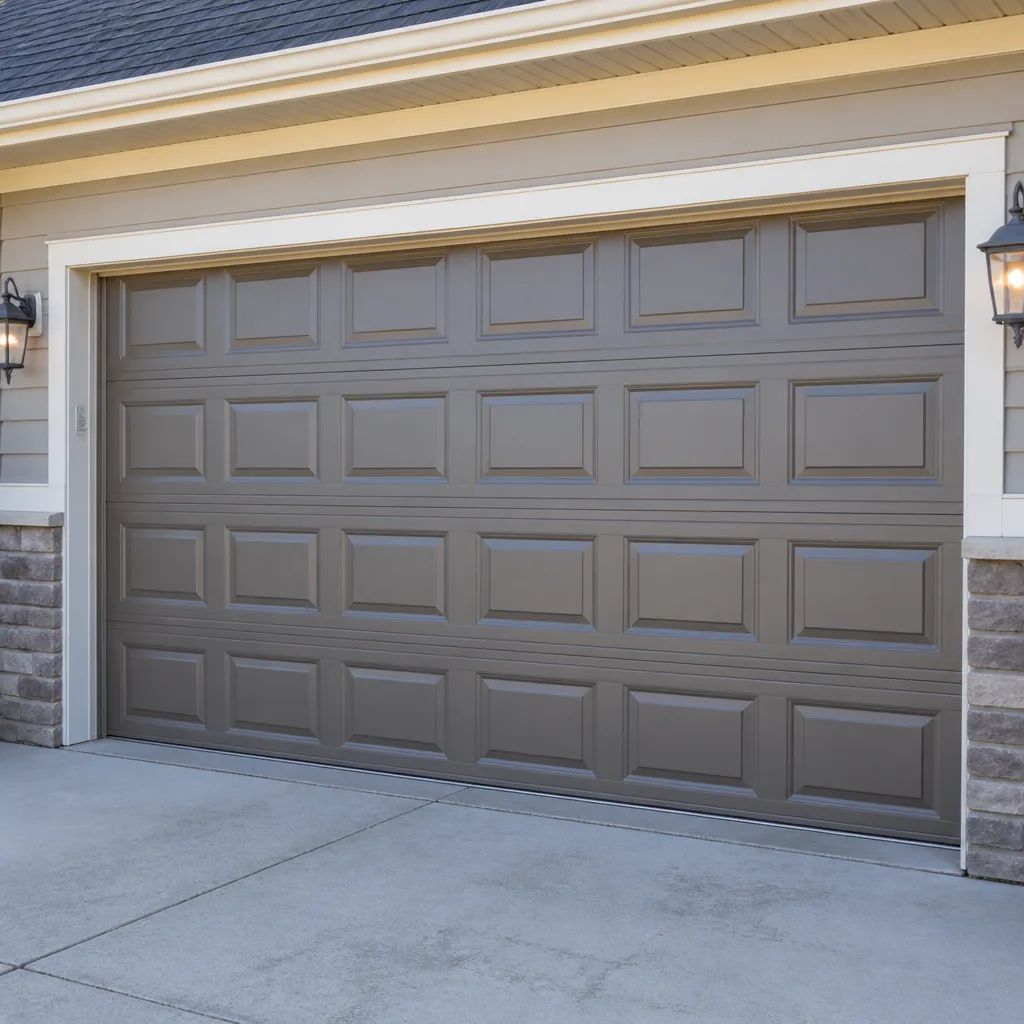 Raised-panel steel
 Carriage house
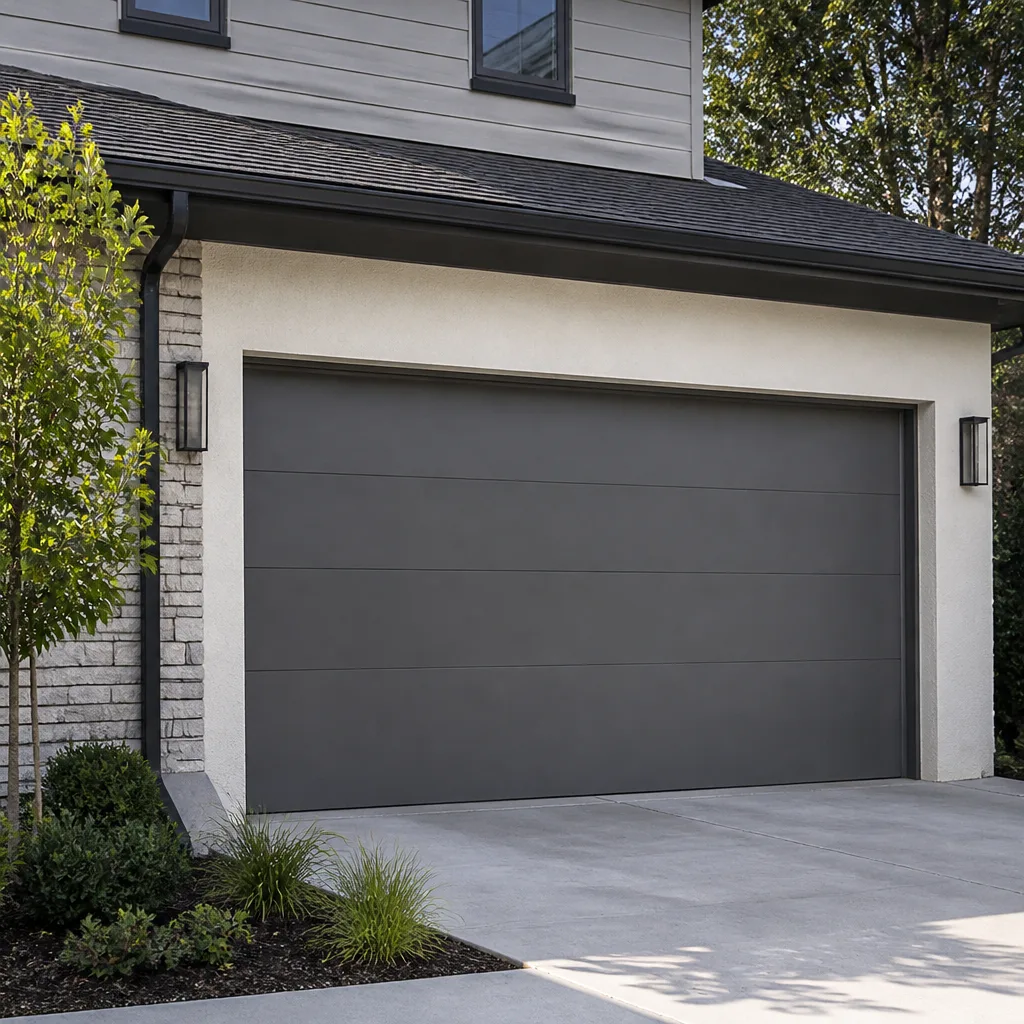 Modern flush
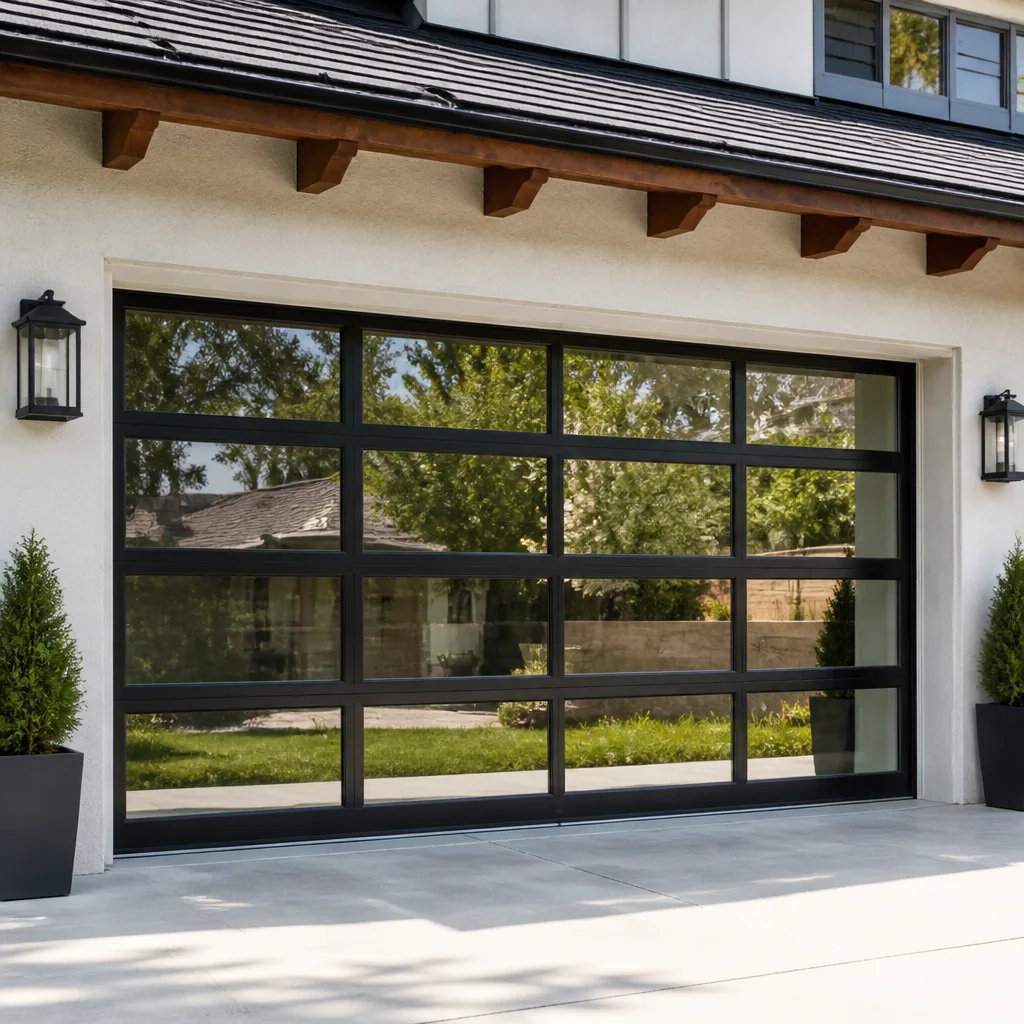 Full-view glass
 LiftMaster openers
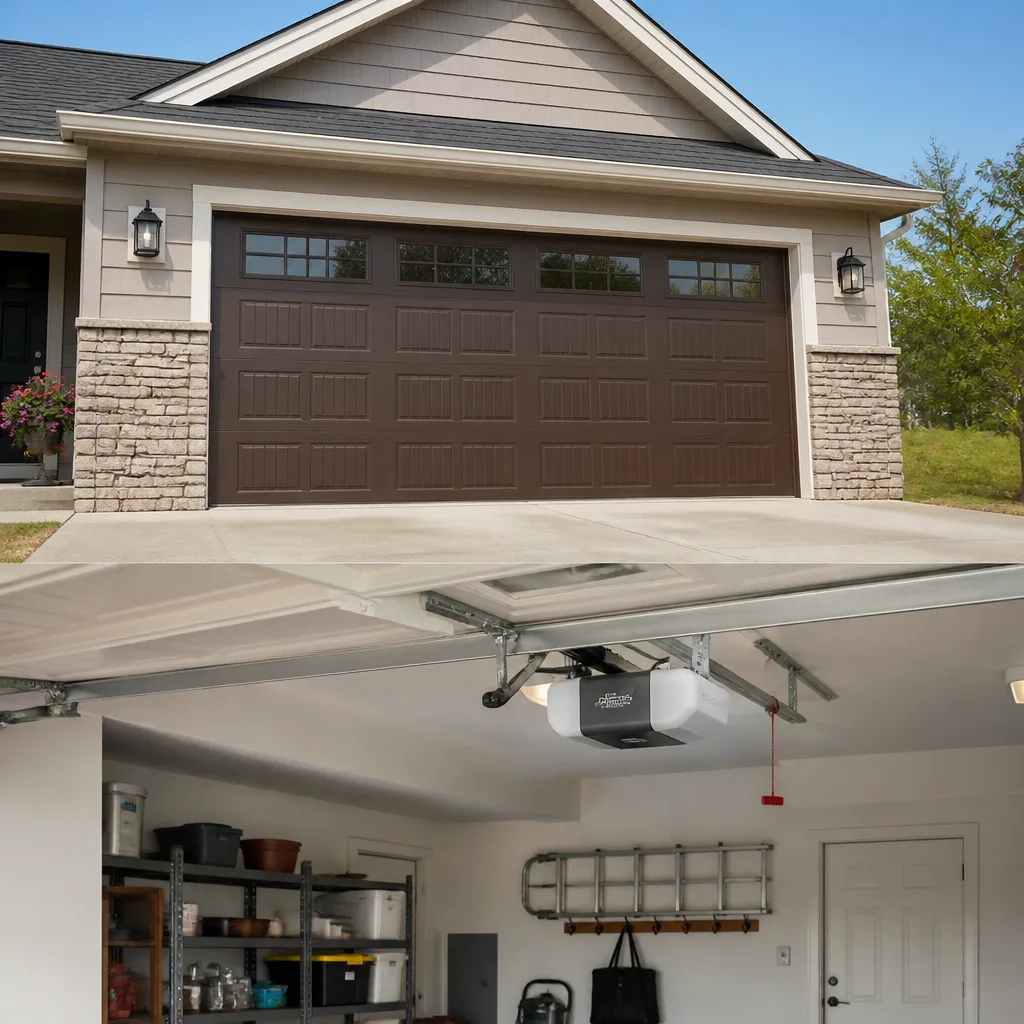 Chamberlain openers
Full 25-point door and opener safety check with every visit - springs, cables, rollers, tracks, and your LiftMaster or Chamberlain opener included
You get a price before we start. It does not change when the pro arrives.
Get your free estimateDIY vs Professional Garage Door: The Paterson Homeowner’s Decision Guide
Replacing a bottom weather seal is an honest DIY job. Adjusting a torsion spring is a task that puts people in the emergency room, and no tutorial changes the physics. The line between the two isn’t drawn where most homeowners think it is. It isn’t about how handy you are or how confident you feel after watching a video. It’s about stored energy and injury risk, and that line runs right through the middle of your door system. In this guide, we sort garage door tasks into what you can safely handle, what comes with caveats, and what warrants a hard stop. We’ll also cover the real cost of DIY mistakes, the tools worth owning in Paterson, and how to describe a problem clearly so you get the repair you need and nothing more.
Quick Answer
Routine maintenance, weather seal replacement, and visual inspections are safe to do yourself. Anything involving tension – torsion springs, cables, and the brackets that hold them – is professional-only because a sudden release can cause serious injury. Track adjustments, opener repairs, and panel replacement fall in the middle: doable for some homeowners, but risky enough that a trained technician is usually the better call. In Paterson, the smart move is to know exactly which category your repair falls into before you touch a tool.
Styles & brands we work with
- Raised-panel steel
- Carriage house
- Modern flush
- Full-view glass
- LiftMaster openers
- Chamberlain openers
Table of Contents
- The Three Categories of Garage Door Work
- Safe DIY: Tasks You Can Honestly Handle
- DIY With Caveats: Where It Gets Tricky
- Professional-Only: The Hard Stop at Tension
- What DIY Mistakes Actually Cost
- Tools to Own vs Tools to Skip
- How to Describe a Repair So You Don’t Get Upsold
- A Simple Paterson Maintenance Routine
The Three Categories of Garage Door Work
Every garage door job you’re likely to face in Paterson sorts into one of three buckets. Sorting correctly before you start is the whole decision. Get it wrong in the wrong direction and you either waste money on a call you didn’t need, or you risk an injury that no saved service fee justifies.
Here’s how we break it down for homeowners who ask:
- Safe DIY. Low-tension, low-height, low-consequence work. Lubrication, seals, visual checks, tightening exposed bolts, cleaning the photo-eye lenses.
- DIY with caveats. Work that’s physically possible but carries real risk of damaging the door, the opener, or yourself if the diagnosis is off. Track alignment, roller replacement, opener troubleshooting, panel swaps.
- Professional-only. Any task where stored mechanical energy can release suddenly. Torsion spring work, cable replacement, spring bracket removal, and anything that requires unwinding tension to reach a part.
Notice what’s not on the list: “how complicated it looks.” A lift cable replacement looks simple. It isn’t. A broken hinge looks scary. It usually isn’t. Complexity and danger are two different scales, and conflating them is the most common mistake we see in Paterson garages. The door itself doesn’t care how confident you feel; it only cares whether tension is being controlled safely.
Safe DIY: Tasks You Can Honestly Handle
These jobs ask nothing of the door’s tension system, keep your feet on the floor, and cost little to get wrong. If you’re a homeowner who wants to stay involved with your door, this is where to put that energy. It’s also where most of the value sits, because routine attention to these items prevents the breakdowns that turn into expensive repairs.
- Lubricating hinges, rollers, and tracks. A garage door lubricant – not WD-40 – on the hinge points and roller stems a couple of times a year keeps everything quiet and reduces wear. Do the torsion springs too, but only along the coil surface with the door closed. Never reach into the springs themselves.
- Replacing the bottom weather seal. The rubber seal at the base of the door takes a beating from New Jersey’s freeze-thaw cycles and summer heat. It slides or pulls out of its retainer and the new one slides back in. A chair and a screwdriver handle most installations.
- Cleaning and aligning the safety photo-eyes. The two small lenses near the floor on either side of the opening. Wipe them, check that they’re pointed at each other, and make sure nothing blocks the beam. A door that reverses for no obvious reason is usually a dirty or knocked-out-of-line eye.
- Tightening exposed bolts on the door face and hinges. Vibration loosens hardware over time. A socket set and moderate pressure on visible bolts is fine. Stop at anything connected to a spring bracket or a cable.
- Visual inspection. Look for frayed cables, worn rollers, cracked hinges, and gaps in the seal. Catching these early is the cheapest repair you’ll ever make.
- Cleaning the opener’s travel path. If you have a LiftMaster or Chamberlain opener, keeping the rail free of debris and the light lenses clean prevents most nuisance behavior.
None of these require specialty tools or a ladder, and none of them can release stored energy. If the task you’re facing doesn’t appear on this list, read on before you start.
DIY With Caveats: Where It Gets Tricky
Some work is genuinely doable for a careful homeowner but carries consequences if the diagnosis is wrong or the process is rushed. We treat these as “understand it fully or call” jobs. If you’re not sure which category you’re in, that uncertainty itself is a signal to get eyes on the door.
Roller replacement. Worn steel rollers are loud and rough, and swapping them for nylon rollers is a real improvement. The caveat: removing a roller means the door’s weight is momentarily unsupported at that hinge. If the door isn’t fully closed and the tension isn’t where it should be, the door can shift. Do one roller at a time with the door closed and the opener disconnected, or have it done.
Track alignment. A door that’s rubbing or binding may need a track pushed back into line. A gentle nudge with a padded tool can fix a minor knock. Bending a track back hard, especially near the curved section, can crack the door or strain the opener. If the track is bent from impact, we’d rather look at it than have you force it.
Opener troubleshooting. Resetting a remote, reprogramming a keypad, adjusting travel limits, or replacing a battery is routine. Diagnosing why a Genie or Raynor opener reverses at the same spot every time takes more: sensor logic, force settings, and door balance all interact. Replace the obvious consumables, then stop.
Panel replacement. A single cracked bottom panel can sometimes be swapped without touching the tension system. But matching a Clopay or Amarr panel to the existing door, and doing it without disturbing the hinges and cables in sequence, is where homeowners run into trouble. Sections are heavier than they look and need to be supported correctly.
The pattern with all of these: physically possible, but one wrong step away from a much bigger bill. That’s the definition of a caveat.
Professional-Only: The Hard Stop at Tension
Torsion springs are the most dangerous part of any garage door, and that’s why we treat them differently from everything else on this page. A torsion spring holds the full weight of the door in a wound coil. When it’s under tension, there is a stored force in your garage that can release in a fraction of a second. No video changes that. No confidence changes it. This is where the DIY line is a hard stop, not a suggestion.
These tasks belong to a trained technician:
- Torsion spring replacement. The springs mounted on the shaft above the door. Replacing one requires winding and unwinding the coil with the correct bars and holding it under control throughout. The wrong bar, a slipped wind, or a released spring can break bones and worse.
- Cable replacement. Cables are under the same stored tension as the springs. A snapped or frayed cable means the door is no longer safely supported. Never cut or loosen a cable to inspect it – call.
- Extension spring work. Mounted along the horizontal tracks with safety cables, extension springs are less dangerous than torsion springs but still carry substantial stored energy. This is still a professional job. If you have a door with extension springs and one has broken, keep the door closed and call.
- Spring bracket and center bearing plate work. These parts are what hold the wound springs in place. Removing a bracket while tension is present is a direct injury risk.
- Any repair that requires unwinding tension to reach the part. Sometimes a straightforward-sounding job – replace a drum, fix a bent shaft – only becomes accessible once the springs are unwound. That makes it a tension job even if the visible problem isn’t the spring.
If you take one thing from this guide, take this: garage door spring repair is one of the most technically demanding and safety-critical repairs in the trade. Our technicians have up to 14 years of experience, and this is the work they take most seriously. If your problem involves a spring or a cable, don’t test the theory. Reach out for garage door spring repair and let someone with the right tools and experience handle it.
What DIY Mistakes Actually Cost
The real cost of a DIY mistake isn’t the parts you bought. It’s the parts you wasted, the secondary damage you caused, and the premium you pay for a technician to undo your work before the actual repair begins. We can’t quote a fixed number for every scenario in Paterson, because it depends on what broke. But we can tell you which mistakes hurt most, by task type.
- Improperly wound spring. The spring is the cheap part. If a spring is wound to the wrong tension, it either doesn’t counterbalance the door or it snaps early. If it releases while you’re working, the injury is the cost that matters. If it releases after, you’re replacing the spring again plus a bent shaft or drum.
- Cable cut without releasing tension. A tensioned cable will whip when cut. It can crack a door panel, bend a track, and damage the opener rail. Replacing the cable you meant to replace, plus a panel and a track section, is a much larger repair than the cable alone would have been.
- Panel swapped in the wrong sequence. Sections that aren’t supported correctly can fold or warp, and once a panel is bent it often can’t be straightened. That’s a replacement, not a repair.
- Opener forced past a binding door. Running a LiftMaster or Chamberlain opener against a door that’s binding burns out the gear and the motor. The opener was fine; the diagnosis was wrong.
- Track “adjusted” too far. A track bent back with force can throw the door off balance, and an unbalanced door accelerates roller and hinge wear across the whole system.
On top of the parts, there’s a labor reality most homeowners don’t expect: when a door arrives mid-repair, part of the job is putting it back into a state where the actual repair can be diagnosed. That’s time, and time is what you pay for. The written quote always sets the final price, but the more work the door needs, the further that number moves from what a straight repair would have cost. Call (844) 553-2327 if you’ve started a repair and want an honest assessment before it goes further.
Tools to Own vs Tools to Skip
Every do-it-yourselfer with a full toolbox has thought about buying winding bars. Skip them. Some tools are worth owning and some only make sense if you’re doing a job every week. The tension tools fall into the second category – a one-time job doesn’t justify buying the equipment or learning the technique on your own door.
Tools worth keeping on hand in Paterson:
- A socket set and adjustable wrench for visible bolts and hinge hardware
- A garage door lubricant specifically made for doors, plus a simple application wand
- Work gloves and safety glasses – standard for any maintenance
- A soft brush and cloth for photo-eyes and seal channels
- A flashlight or work light for inspecting cables and rollers
- Your opener’s remote and keypad manuals, for reset and reprogram steps
Tools worth borrowing or skipping:
- Torsion winding bars and the technique that goes with them – a one-time purchase that carries ongoing injury risk isn’t a good trade-off
- Cable pullers and tension gauges
- A full track-alignment toolkit (the standard adjustable wrench does most light duty)
- Replacement roller sets purchased before the diagnosis – you may not need the type you think you do
The rule of thumb: if the tool exists specifically to control stored spring tension, it belongs to the trade, not the homeowner. Buy the maintenance tools. Rent or call in the tension tools. It’s the cheapest way to protect both your door and your budget.
How to Describe a Repair So You Don’t Get Upsold
One of the real reasons homeowners worry about calling a professional is the fear that a small repair gets described as a bigger job. That’s fair. The way to fix it isn’t to avoid calling. It’s to describe the problem accurately so the diagnosis is based on facts, not guesses. We handle garage doors, opener systems, and everything in between, and our whole approach is repair-first – fix what’s there before recommending a replacement. A clear description from you makes that easier and faster.
- Say what the door is doing, not what you think is wrong. “The door goes up about a foot and stops” is more useful than “I think it’s the spring.” One is an observation, the other is a guess.
- Name the brand if you know it. “The opener is a Chamberlain” or “the door is a Raynor” tells us which hardware and manuals to expect. If you don’t know, check the opener housing and the inner edge of a door panel. If you can’t find it, no problem.
- Say where the noise or resistance is coming from. Top of the door, bottom, one side only, or the opener itself. That narrows the components.
- Say whether the door is stuck open or stuck closed. Stuck open changes the urgency; it’s also a security issue for the home.
- Mention the last thing that happened before the problem started. A power outage, a bump from a car, a recent storm, or nothing at all.
- Say what you’ve already tried. Reset the opener, replaced a battery, cleaned the photo-eyes. That keeps the technician from repeating steps.
- Ask for the diagnosis and the options before they start. A technician with up to 14 years on the bench will tell you what’s broken and what your choices are. You should hear both before any work begins, and the price you’re quoted is the price you agree to, in writing, before the first tool comes out.
When someone gives you a clear answer to “what’s actually broken,” this is the point where a repair-first shop shows its colors. If the first response is a replacement quote without a diagnosis, ask for the diagnosis. For general issues, we do garage door repair across Paterson and the surrounding area, and we work on whatever brand you have, from Genie to Clopay to Amarr.
A Simple Paterson Maintenance Routine
Paterson’s seasons do a number on a garage door. Freeze-thaw cycles in winter stiffen seals and work loose hardware. Summer humidity and heat age the lubrication and swell wood where wood is still present. Add the salt-belt reality of potholes, gravel, and vibration from the street, and a door that’s ignored for years starts to fail all at once. A short routine, done twice a year, is the best defense.
A couple of times a year – ideally before winter and again after – run through this:
- With the door closed, lubricate the hinges, roller stems, and the coil surface of the springs. Wipe away excess.
- Test the balance: disconnect the opener and lift the door halfway. It should hold where it is with light pressure. If it drops or rises on its own, the balance is off.
- Check the bottom seal for gaps, cracks, or a seal that’s pulled loose from its retainer.
- Look at the hinges for cracks and the rollers for flat spots. Note anything that needs attention.
- Clean the photo-eyes and test them by waving an object in the beam while the door closes.
- Listen. A door that’s getting louder is telling you something is wearing.
- Test a safety reversal monthly if you have an opener with a force-sensing system, following the opener manual.
Anything on this list that turns into a repair belongs to the caveats or professional-only categories above. If a spring looks worn, a cable looks frayed, or the door binds at a single point, call before it gets worse. That divide – routine care in your hands, tension in ours – is exactly the point of this guide. For the opener side of things specifically, we do garage door opener repair for the eight major brands, including LiftMaster, Chamberlain, Genie, Clopay, Amarr, Wayne Dalton, Craftsman, and Raynor.
Common Mistakes to Avoid
- Replacing a spring without releasing the door’s tension first. This is the mistake that sends people to the hospital. The old spring still holds tension even after it looks dead. Never touch a spring bracket, drum, or cable with tension present – leave it to a technician.
- Buying a replacement spring of the wrong size. Torsion springs are sized to the door’s weight and height with specific wire gauges and lengths. The wrong spring won’t counterbalance the door or will wear out fast. Match the door, not the price.
- Cutting a cable to inspect it. A tensioned cable will whip when cut and can damage the door and the surrounding area. If a cable looks frayed, leave the door closed and call.
- Forcing an opener against a binding door. A door that binds needs the bind fixed, not the opener replaced. Running the opener against resistance damages the gear and motor and turns a repair into two repairs.
- Assuming a loud door is a broken door. Noise is usually worn rollers or a lack of lubrication, not a failure. Try the routine maintenance before assuming a replacement.
- Pushing a track back into line with force. Tracks can be gently nudged, but forced track work throws the door off balance and can crack panels. Impact damage is a technician’s call.
- Letting the DIY stack up. A few small ignored repairs – a worn roller, a slightly bent hinge, a seal that’s gone – combine into an unsafe door. Address each one when you spot it, and the door stays manageable.
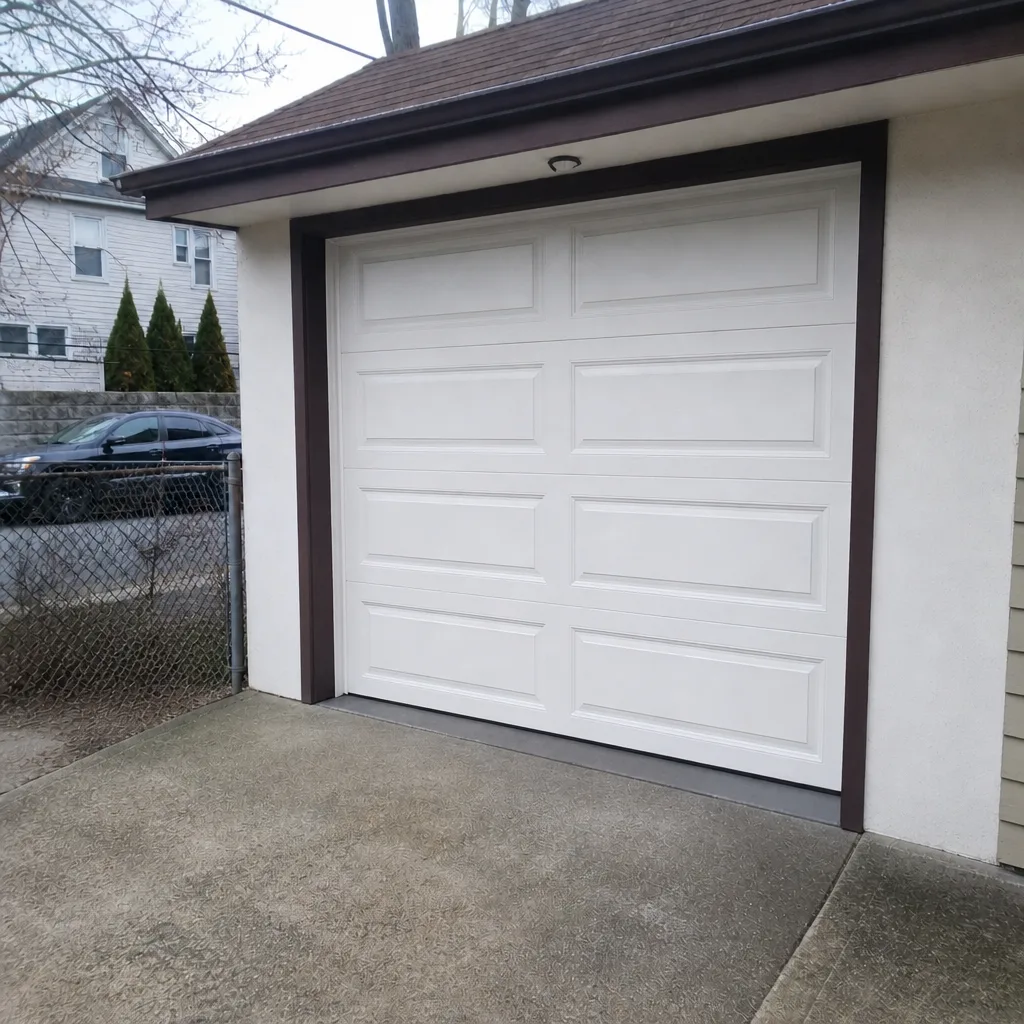
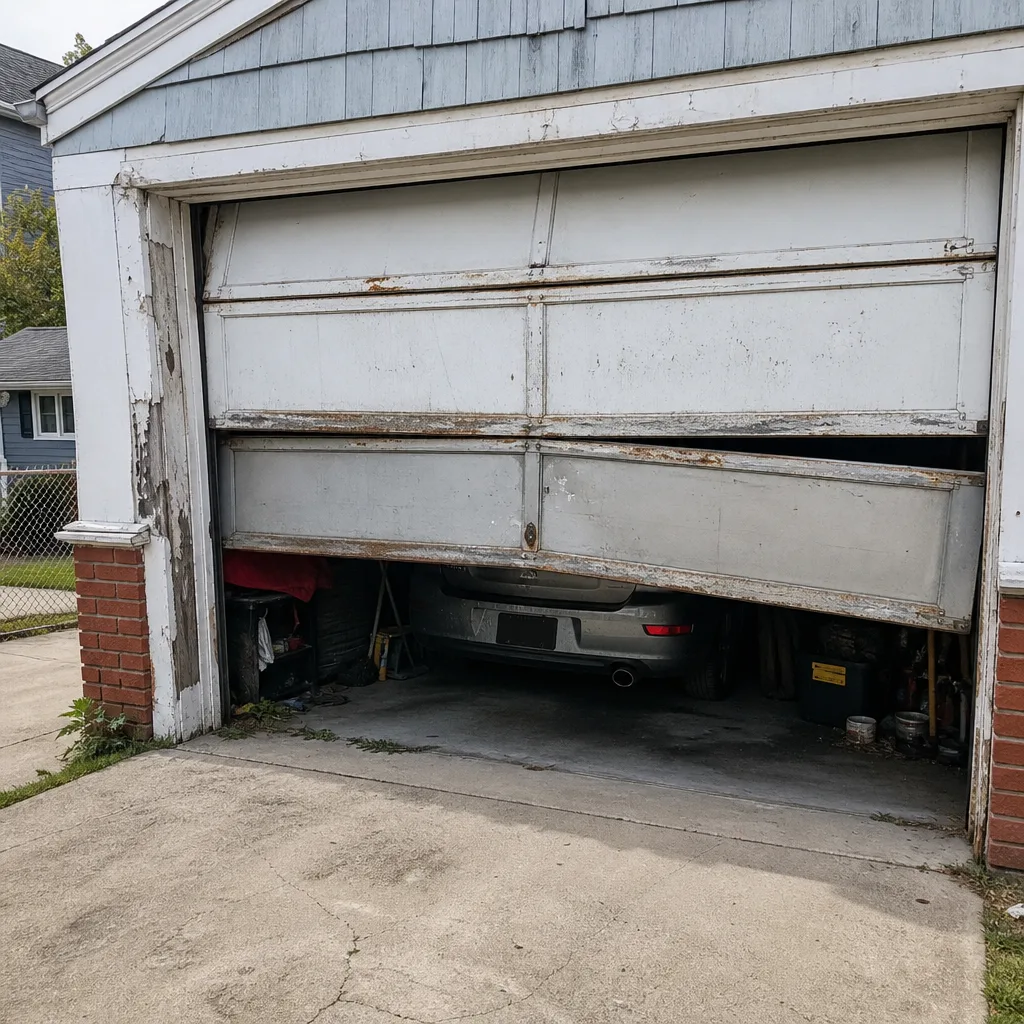
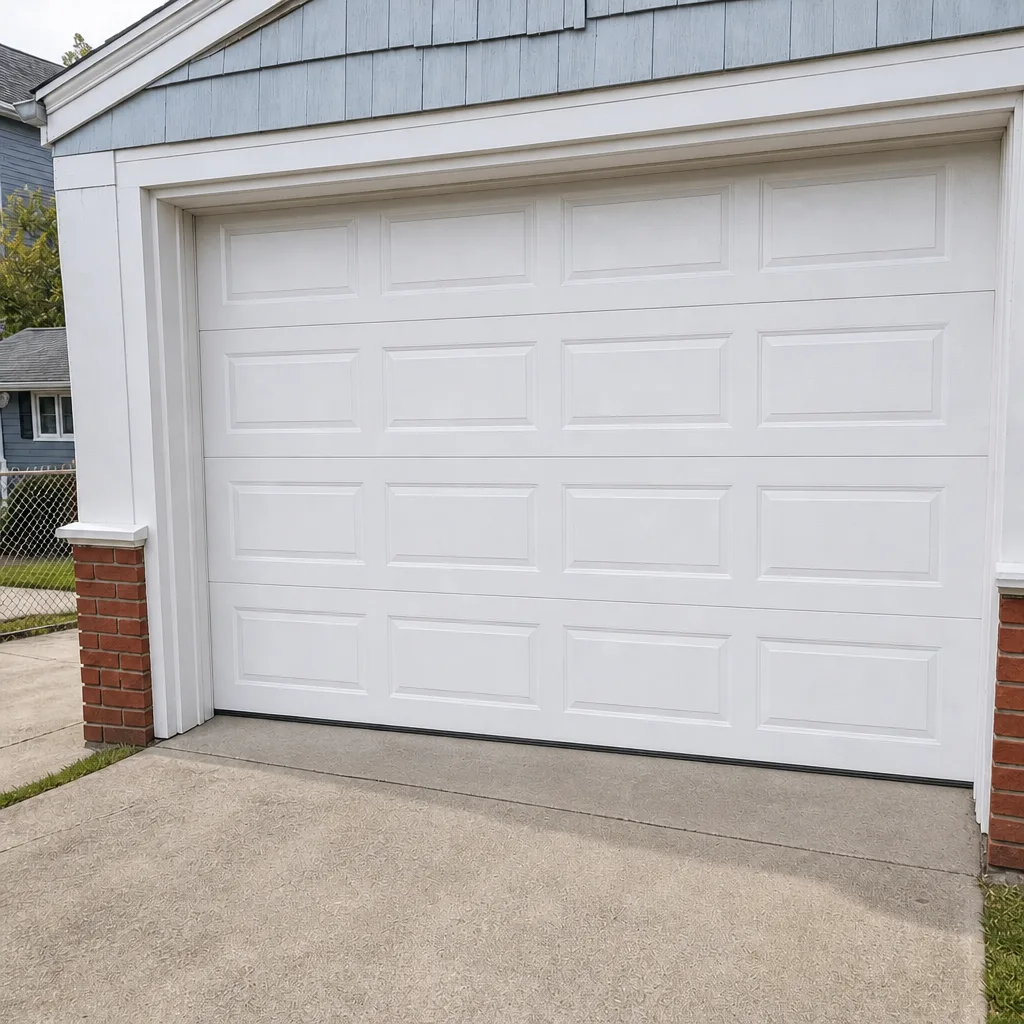
See the difference
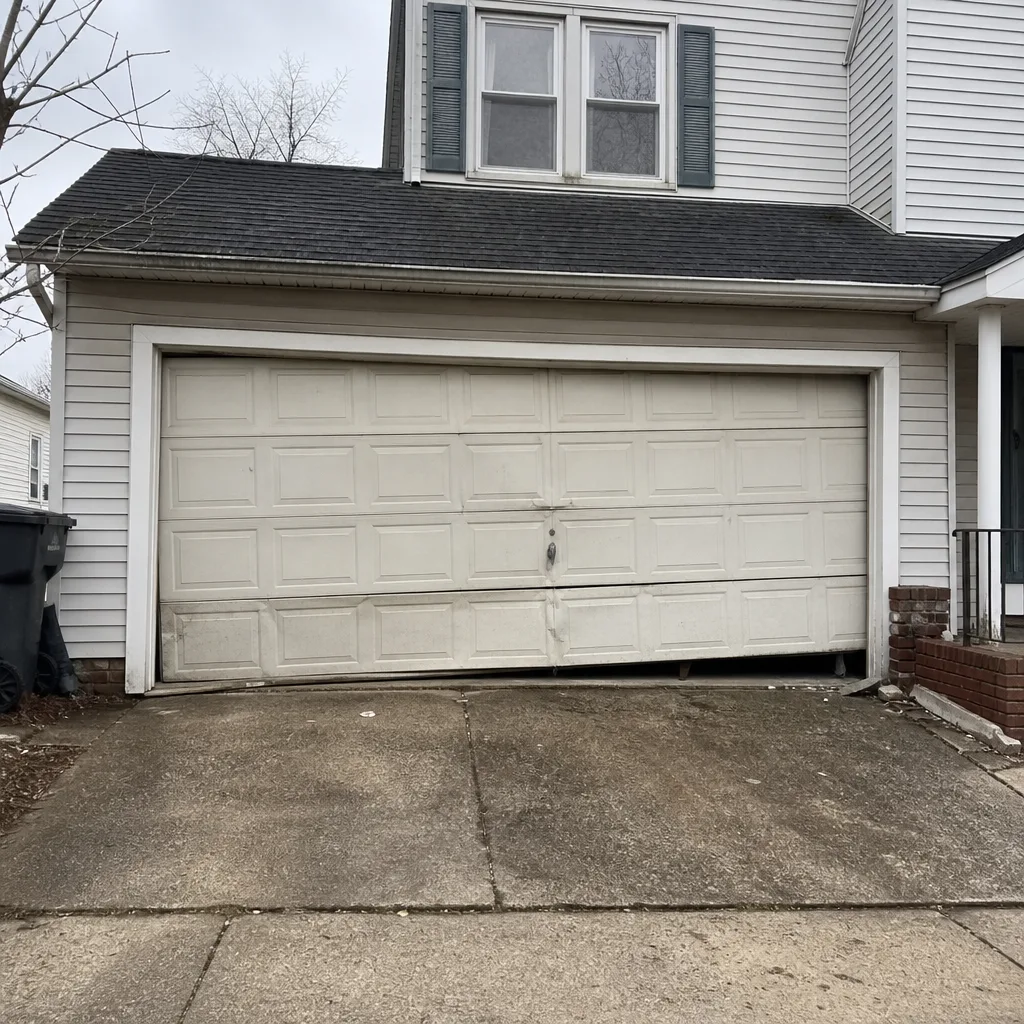 Before
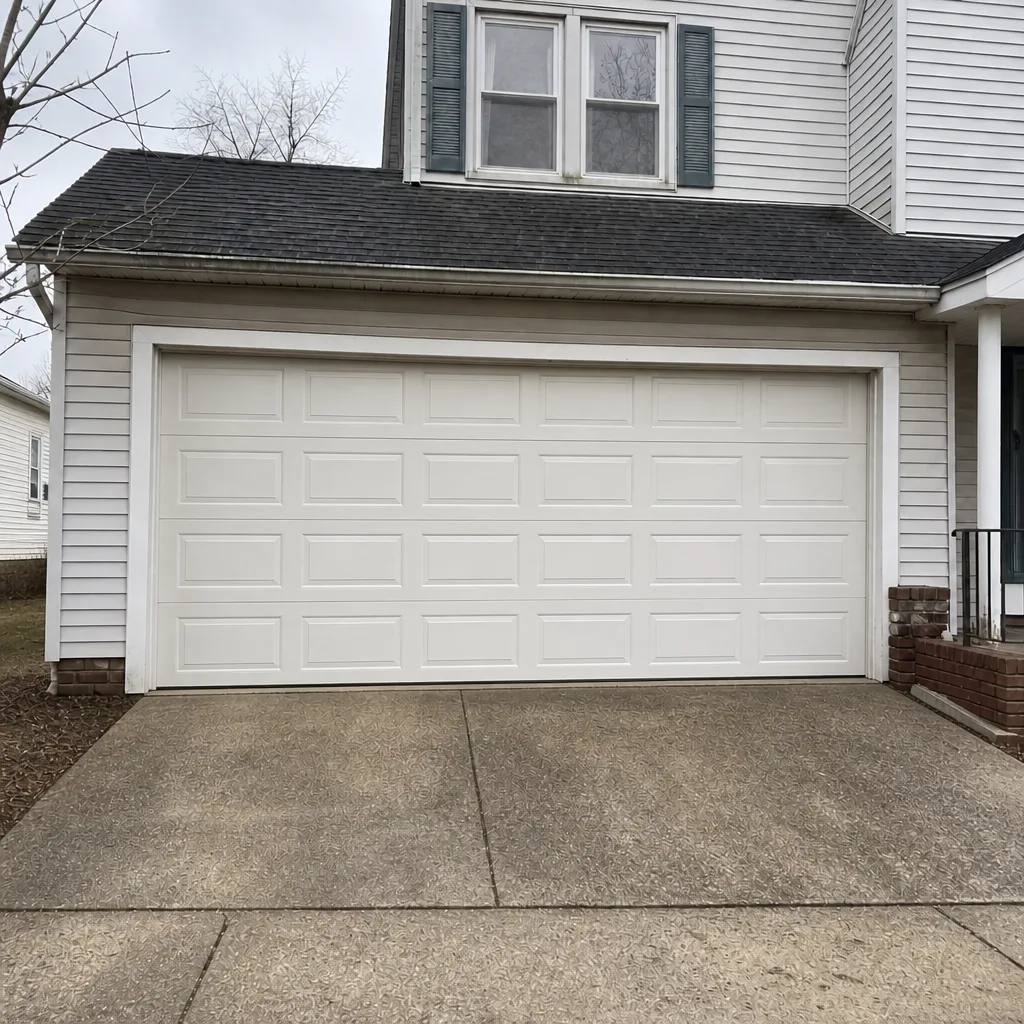 After
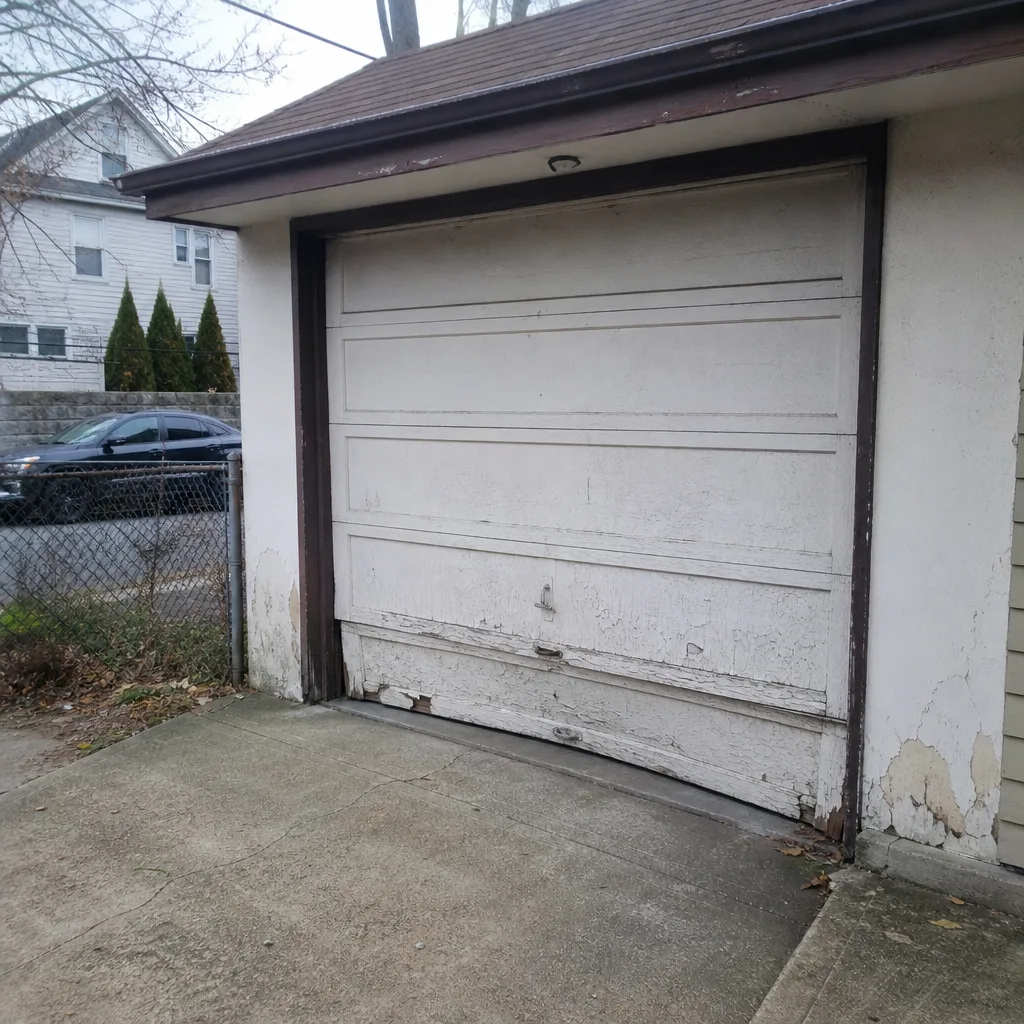 Before
 After
 Before
 After
When to Call a Professional
Call a professional if anything on the tension side of your door is involved: a snapped or sagging spring, a frayed or broken cable, a door that won’t move at all, or a door that hangs crooked. Call if the door is stuck open, since that leaves your home exposed. Call if the door reverses without warning, if the opener runs but the door doesn’t move, or if a repair you started needs rescuing before it gets worse. Any of those situations is a safety or structural issue, not a matter of confidence. Paterson Garage Door Repair Co offers free estimates in Paterson – call (844) 553-2327. We handle both the door and the opener in one visit, which means you don’t need to schedule two vendors for one problem.
Frequently Asked Questions
No. Torsion and extension springs are under stored tension while in place and can release with enough force to cause serious injury. Replacing a spring requires properly sized winding bars, correct winding technique, and control of the door throughout the process. In our experience, this is the repair where DIY ends the moment a spring is involved.
Some tasks are honestly DIY, and others are not. Lubrication, seal replacement, photo-eye cleaning, and visual inspections are safe. Spring and cable work is professional-only. Track, roller, opener, and panel work can go either way depending on your comfort and the diagnosis. If you’re unsure which category your issue is in, describe it and we’ll tell you plainly whether it needs a technician.
It depends on the spring, the door, and how much damage the failure has caused. We quote the repair individually based on what’s actually on the door, and your price is quoted and agreed before any work starts. Call (844) 553-2327 for a free estimate – we’ll walk you through the price before you commit.
Because winding bars are only half of it. The bar is a tool, but the technique – how to wind, how to lock the coil in place, and how to release tension safely when something goes wrong – is the part that matters. A slip while winding is what sends people to the ER. A one-time job doesn’t justify buying the equipment or learning the technique on your own door.
Stuck-open doors are an emergency, and we offer emergency garage door service for exactly this situation, including outside standard business hours. A door stuck open leaves the home exposed. Reach out and we’ll walk you through securing the opening while a technician heads your way.
Sometimes, yes – but not because of a penalty. If a repair is half-finished, part of the job is putting the door back into a state where the actual repair can be done safely. That adds time and can mean additional parts. The written quote always sets the final price before any work begins, so you’ll know exactly where you stand before a tool comes out.
The Bottom Line
The DIY-vs-professional decision on your garage door isn’t about how handy you are. It’s about which tasks carry genuine injury risk, and that line runs at spring tension. If the job involves a spring, a cable, or a bracket under wound tension, it’s professional-only, full stop. Routine maintenance, seals, and photo-eyes are yours to handle and worth doing twice a year. Everything else is a judgment call – understand the risk, describe the problem clearly, and get a diagnosis before anyone quotes a replacement. If you’re at the point of calling, that’s where we come in. Same door, fixed right, no upsell. Whether it’s a repair or a full installation, we handle the door and the opener in one visit, for whatever brand you have.
Call Paterson Garage Door Repair Co today at (844) 553-2327 for a free estimate. We’ll talk through what’s happening with your door, tell you honestly whether it’s a DIY job or a professional one, and give you a written price before any work starts. When the door won’t move, you know who to call. We are Paterson Garage Door Repair Co, and we’re here to help.
Written by the team at Paterson Garage Door Repair Co.