Last updated November 21, 2026
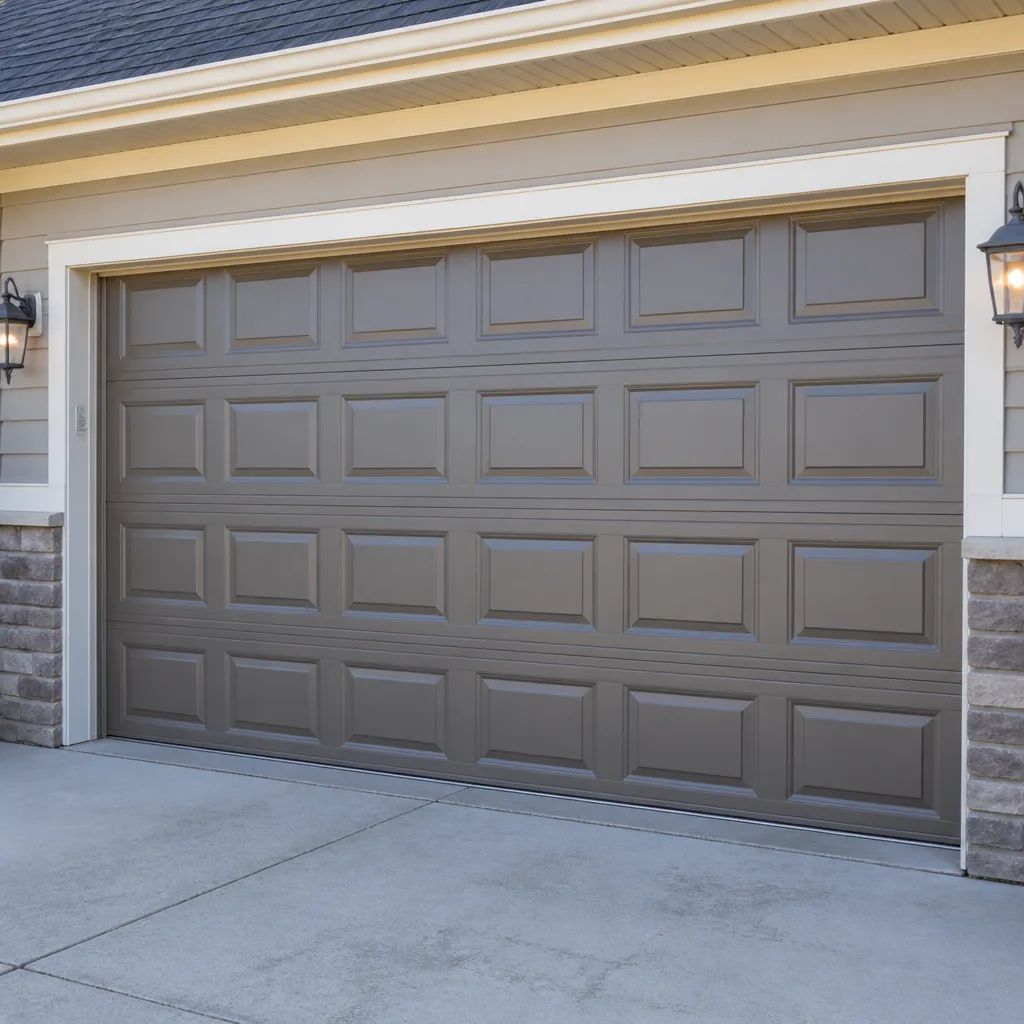 Raised-panel steel
 Carriage house
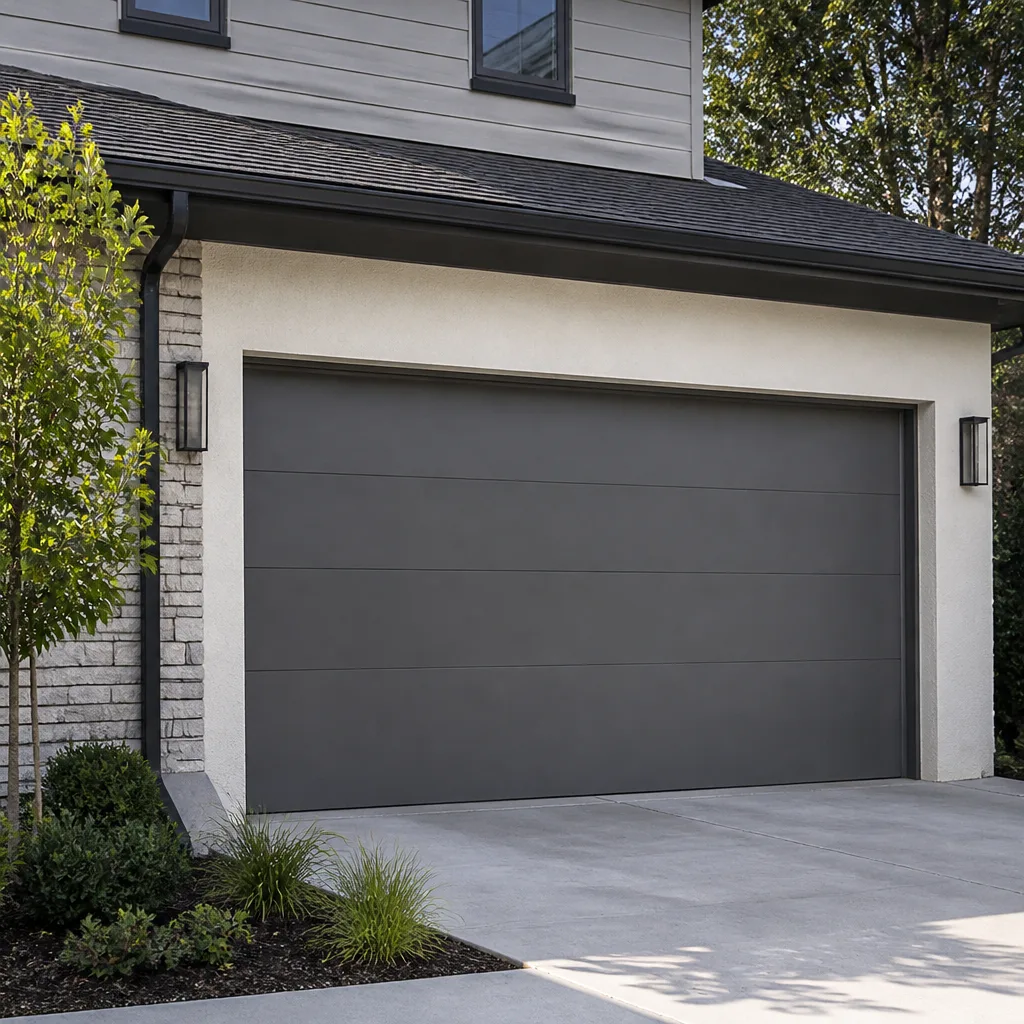 Modern flush
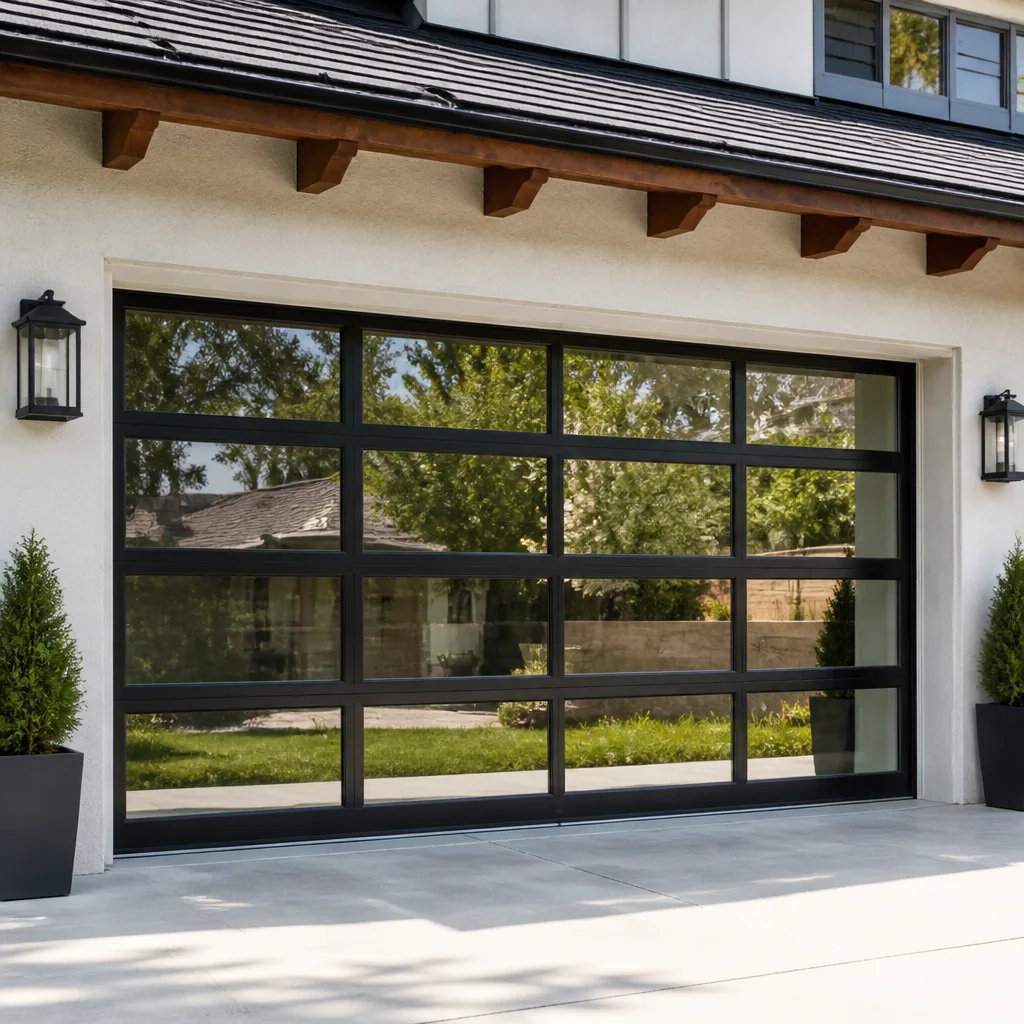 Full-view glass
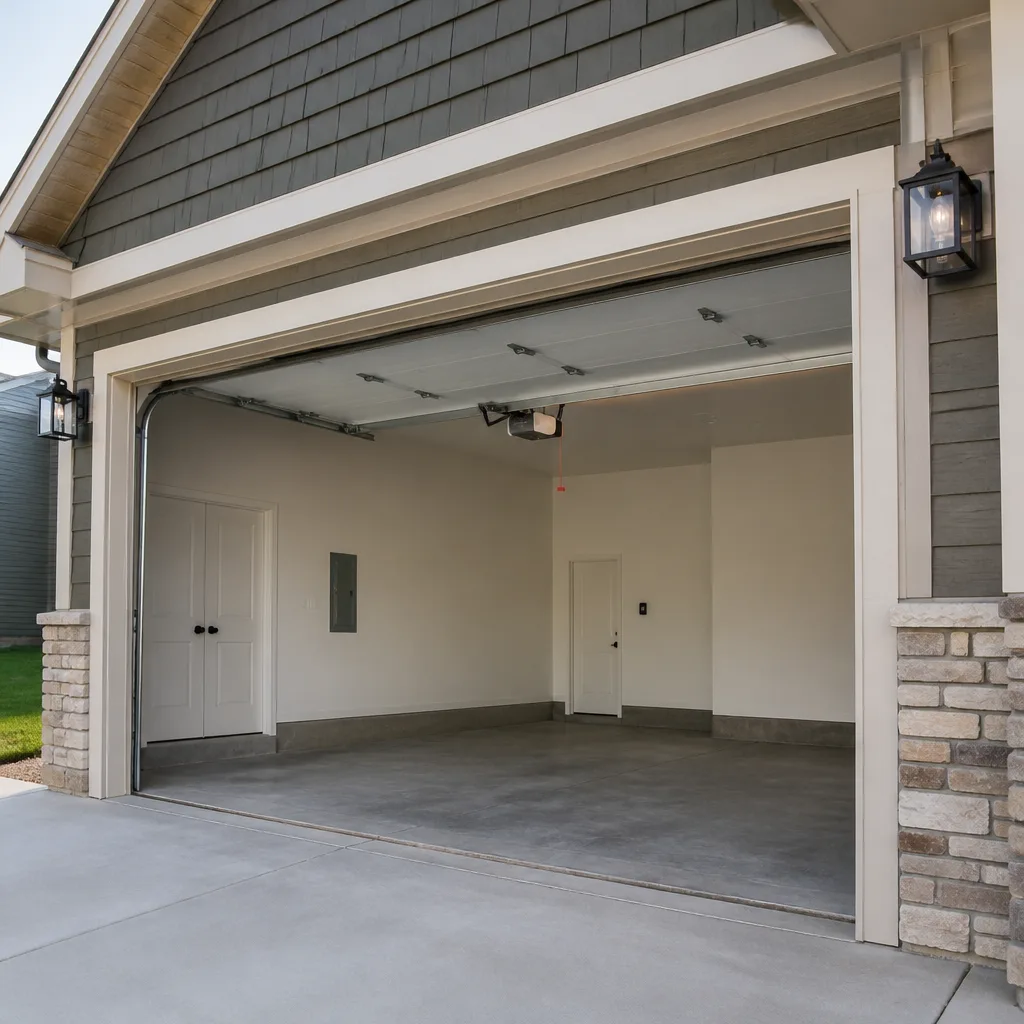 LiftMaster openers
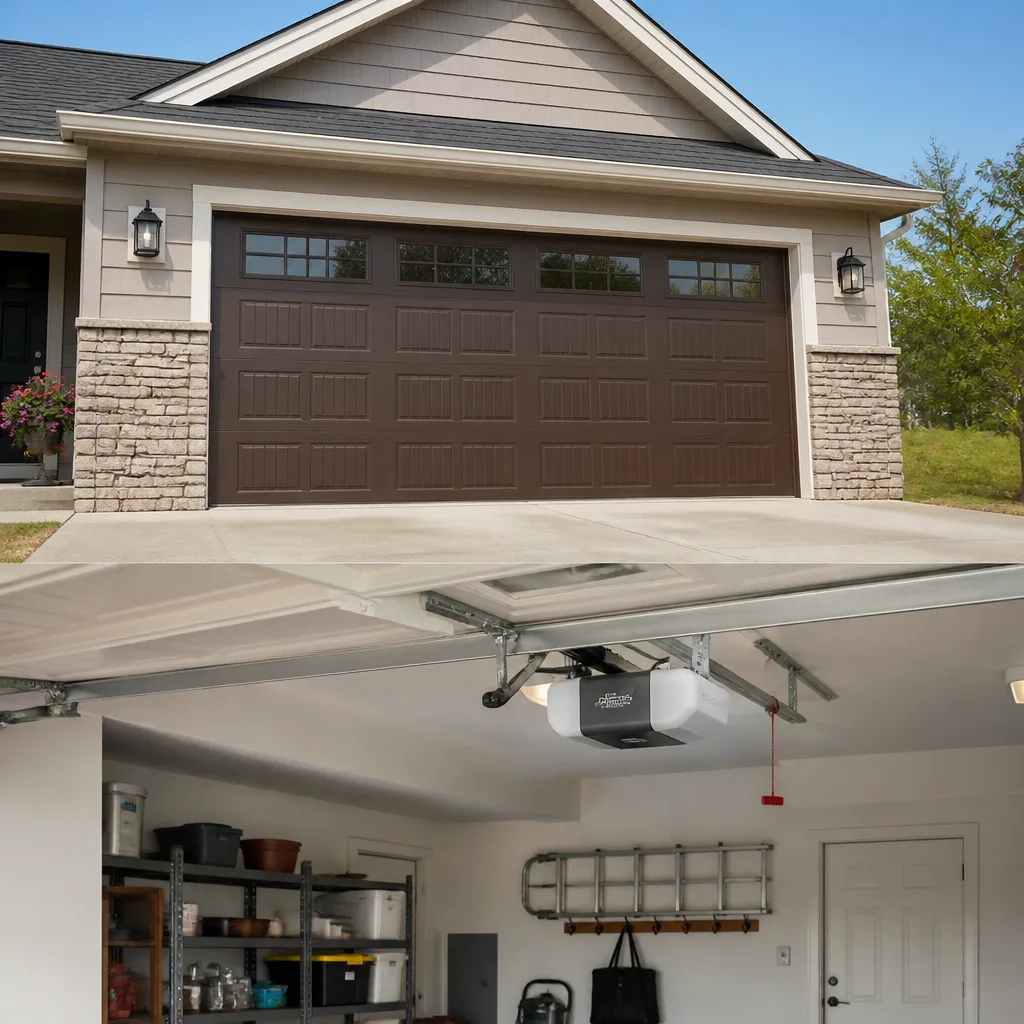 Chamberlain openers
Full 25-point door and opener safety check with every visit - springs, cables, rollers, tracks, and your LiftMaster or Chamberlain opener included
You get a price before we start. It does not change when the pro arrives.
Get your free estimateGarage Door Repair Maintenance Checklist for Paterson Homeowners
A can of WD-40 and good intentions cause more garage door service calls than neglect does. Petroleum-based sprays wash out the grease the hardware actually needs, and Paterson homeowners pay for that mistake every winter when rollers start grinding and hinges seize in the cold. Most checklists you’ll find online tell you to “lubricate the springs” and stop there: no product named, no amount given, no description of what a healthy door should sound like. This guide fixes that. You’ll get exact lubricants matched to each component, a 15-minute inspection you can run yourself with pass/fail criteria, the wear points that Northeast freeze-thaw cycles hit hardest, and a simple log that helps a technician diagnose faster and helps you push back on unnecessary upsells.
Quick Answer
A garage door maintenance checklist in Paterson covers four things: lubrication with the right product for each component, a visual inspection of springs, cables, rollers, hinges and tracks, a balance and safety-reverse test, and a written log of what you find. Most of it takes 15 to 30 minutes and needs no tools beyond a rag and a tube of white lithium grease. Anything involving springs, cables, or the torsion shaft above the door is a look-only item. Leave adjustment and replacement to a trained technician.
Styles & brands we work with
- Raised-panel steel
- Carriage house
- Modern flush
- Full-view glass
- LiftMaster openers
- Chamberlain openers
Table of Contents
- Which Lubricant Goes Where
- The 15-Minute Visual Inspection
- How Paterson Freeze-Thaw Cycles Change the Wear Pattern
- Maintenance Items vs. Failure Signals
- The Balance and Safety-Reverse Test
- Opener Care by Brand
- A Seasonal Schedule for a Northeast Climate
- What to Log and Photograph
Which Lubricant Goes Where
Every moving part on a garage door needs lubrication, but not the same kind. Using one product everywhere is the single most common maintenance error we see on Paterson doors, and it’s the reason a door that was quiet in October rattles by January. Here’s the component-by-component breakdown.
- Torsion and extension springs: a light coat of white lithium grease or a silicone-based spray. Springs move against themselves as they wind and unwind, and a dry spring develops friction that shortens its life. Never use WD-40 here; it’s a solvent, not a lubricant, and it strips whatever protective coating the spring had.
- Steel rollers: a few drops of motor oil or a garage-door-specific roller lubricant at the bearing. Nylon rollers need nothing; oil attracts grit that wears nylon faster.
- Hinges: white lithium grease at each pivot point, applied with a rag behind the hinge to catch drips.
- Tracks: nothing. Tracks are guides, not bearings. Grease in a track collects dust and hair and turns into a sticky paste that drags on the rollers. Wipe tracks clean with a dry cloth and leave them dry.
- Opener rail and chain: a light chain lubricant on chain-drive units only. Belt-drive openers need no rail lubrication at all.
- Weather seal and bottom rubber: a silicone spray keeps the rubber from cracking and stops it from freezing to the concrete.
Twice a year is the right rhythm: once in late fall before the cold sets in, and once in spring to clear out winter grit. If your door is a Wayne Dalton or Clopay model with a torsion system, pay particular attention to the spring coating, since those springs carry a lot of stored energy and dry metal under tension is where trouble starts.
The 15-Minute Visual Inspection
You don’t need to touch anything mechanical to catch most developing problems. This sequence takes about 15 minutes, in this order, with the door closed and the opener disconnected. Disconnect the opener by pulling the red release cord so the door is under manual control, and never put your hands anywhere near a spring or cable while the door is under tension.
- Springs (visual only). Look at the coil above the door or the springs along the sides. Pass: even spacing, no rust-through, no visible gap in the coil. Fail: any gap in a torsion spring, or a stretched extension spring, means the spring has broken and the door is unsafe to operate.
- Cables. Check both sides for fraying, kinks, or slack. Pass: cables sit tight and even. Fail: any frayed strand or a cable hanging loose means you stop and call. A snapped cable under tension can cause serious injury.
- Rollers. Look at each roller in its hinge. Pass: rollers spin freely and are seated in the track. Fail: a cracked or flat-spotted roller, or one that has popped out of the track.
- Hinges. Pass: no cracks, screws tight. Fail: a hinge with a visible crack or a screw that won’t hold.
- Tracks. Run a hand along each track. Pass: straight, no dents, parallel on both sides. Fail: a dent or a track that has pulled away from the frame.
- Panels. Pass: no cracks, no separation at the seams, no rust at the bottom edge. Fail: a bent or cracked panel, which affects the door’s structural integrity.
- Weather seal. Pass: seal meets the floor along its length. Fail: gaps, tears, or a seal that’s stiff and cracked.
- Hardware. Pass: all bolts and brackets tight. Fail: any loose bracket, which can cause the door to bind.
If any single item fails, note it and call before opening the door again. Paterson’s older homes, particularly the multi-family buildings near the downtown and along the Eastside, often have doors that were installed decades ago and need a professional eye on the hardware before any more use.
How Paterson Freeze-Thaw Cycles Change the Wear Pattern
Most checklists you’ll read online were written for a climate with mild winters. Paterson isn’t that. The city swings between freezing nights and above-freezing days through the colder months, and that cycle does specific damage that warmer-climate advice ignores.
The biggest effect is moisture. When daytime temperatures climb above freezing, snowmelt and rain pool at the base of the door and seep into the bottom seal. Then it refreezes overnight. A seal that would last years in a dry climate can crack in one season here, and once it cracks, water gets to the bottom panel, which is where rust starts on a steel Clopay or Amarr door. Check the bottom seal and the bottom panel edge in late fall and again in early spring.
Freeze-thaw also stresses the rollers and hinges. Cold contracts metal, so clearances tighten; then thaw loosens them again. A hinge that’s slightly loose in summer will rattle in January, and a roller bearing with a little grit will seize when the temperature drops. That’s why October lubrication matters more than June lubrication in Paterson. Give the hardware a fresh coat of grease before the cold arrives, and it will hold up through the freeze-thaw churn.
The tracks get hit too. Ice and grit accumulate in the bottom curve of the track where the door sits, and if it doesn’t get cleaned out, the door drags every morning until a roller pops. A quick sweep of the track base after any snowmelt or ice storm prevents it.
Maintenance Items vs. Failure Signals
Not every part on a garage door is a maintenance item. Some things you keep up; others you watch and replace. Knowing the difference keeps you from doing adjustments that aren’t safe and from paying for work you don’t need.
Maintenance items (keep them up yourself)
- Lubricating springs, hinges, and the opener chain
- Wiping the tracks clean and keeping them dry
- Spraying the bottom seal with silicone
- Tightening visible hinge and bracket bolts (with the door closed and opener released)
- Clearing debris and ice from the bottom of the tracks
Failure signals (stop, call a technician)
- A gap in a torsion spring or a visibly stretched extension spring
- Any frayed or slack cable
- A door that hangs crooked or that comes down unevenly
- Rollers that have come out of the track
- Grinding or scraping sounds that don’t go away after lubrication
- An opener that reverses without touching anything
Springs are the most dangerous part of any garage door. They’re under enough tension to cause serious injury if you try to adjust or replace one without the right tools and training. This is why we treat them differently: a technician adjusts a spring with winding bars and an understanding of the tension involved, and that’s not a job for a homeowner checklist.
The Balance and Safety-Reverse Test
This is the one test that tells you both whether the door is mechanically healthy and whether the opener’s safety system is working. Do it twice a year, and any time you’ve had work done on the door.
Balance test
- Close the door and pull the red release cord to disconnect the opener.
- Lift the door by hand to about waist height.
- Let it go. A balanced door should stay where you left it, or drift down slowly. If it drops or rises on its own, the springs are out of balance and need adjustment.
- Reconnect the opener when you’re done.
Safety-reverse test
- Open the door fully, then close it using the opener.
- While it’s closing, wave a broom handle or a piece of wood across the door’s path about knee height.
- The door should stop and reverse immediately when it contacts the object. If it doesn’t, the opener’s force or travel limits need adjustment, or the safety sensors near the floor are out of alignment.
An opener that fails the safety-reverse test is a hazard, not a nuisance. If yours fails, stop using it and get it checked before the door closes on a person, a pet, or a car. For a door that’s failing any of this, garage door opener repair can sort out the force limits, sensors, and travel settings in a single visit.
Opener Care by Brand
Your opener has its own maintenance needs, and they vary by brand. We work on LiftMaster, Chamberlain, Genie, Craftsman, and Raynor units, and the care they need isn’t identical. A Craftsman belt-drive and a Genie chain-drive behave differently in a Paterson winter, and the right maintenance reflects that.
- Chain-drive openers (many Genie and Craftsman models): lubricate the chain lightly once a year and check the tension. A chain that’s too tight strains the motor; too loose and it slaps the rail.
- Belt-drive openers (LiftMaster and Chamberlain often use belts): no rail lubrication needed, but check the belt for fraying and listen for squeaking. A squeaking belt usually means a worn pulley, not a lubrication problem.
- All openers: test the safety-reverse function twice a year, keep the safety sensors near the floor clean and aligned, and check the wall-mounted control for a firm connection.
If your opener is making new noises, reversing on its own, or refusing to respond to the remote, that’s a signal to call for garage door opener repair rather than fight it. The circuit boards and force sensors on modern openers aren’t homeowner-serviceable, and opening the housing voids any warranty the unit still has.
A Seasonal Schedule for a Northeast Climate
A maintenance schedule that works in Paterson looks different from one that works in the South. Two seasonal touchpoints do most of the work here, with a couple of light checks in between.
- Late fall (before the first hard freeze). Lubricate springs, hinges, and the opener chain. Spray the bottom seal with silicone. Clear the tracks. Run the balance and safety-reverse test so you’re not caught off guard when the weather turns.
- Early spring (after the last freeze). Clean out the tracks and the bottom seal area where snowmelt has carried grit. Check the bottom panel edge for rust. Inspect hinges and rollers for the wear the winter put on them.
- Mid-summer. A quick visual pass on springs and cables, plus a track wipe. This catches the problems that developed during winter but haven’t shown up yet.
- After any major storm. Check the bottom seal for damage and clear the tracks of debris or ice.
Two full checklists a year plus a couple of quick looks is enough for most Paterson homes. If your door is on an older home, particularly in the neighborhoods where garages were added long after the house was built and the framing may have shifted, an extra visual check on the tracks and hinges in the fall is worth it. When you find something you can’t fix cleanly, garage door repair covers everything from a single roller to a full door that’s come off its track, and a technician can quote it in a single visit.
What to Log and Photograph
This is the part most checklists leave out, and it’s the part that saves you money. If you keep a record of what your door looks like and sounds like when it’s healthy, you have a baseline. A technician can compare it to what’s happening now and diagnose faster; you can push back on any suggestion that a part you checked last month is suddenly failing.
Here’s what to log each time you run the checklist:
- The date and the season. A short note of what you did and whether the test passed.
- A photo of each spring and cable, taken straight on. Photos let a technician spot a developing gap or a cable that’s starting to fray without a site visit.
- A photo of the bottom seal and the bottom panel edge. Rust and cracking show up in photos before they show up in a walk-by.
- A short video of the door opening and closing. Sound matters. A 10-second clip that captures a rattle or scrape helps a technician pinpoint the part that’s failing.
- Any noises or behavior you noticed. “Grinds for two seconds on the way up” is more useful than “seems fine.”
You don’t need a spreadsheet. A folder on your phone is enough. The point is that when a technician comes out, you can show what the door looked like and sounded like before, and any quote you get can be checked against a real baseline.
Common Mistakes to Avoid
- Using WD-40 or a generic spray on the springs and hinges. It’s a solvent, not a lubricant, and it strips the protective grease those parts need. Use white lithium grease or a silicone spray instead, and reserve the WD-40 for loosening rusty bolts.
- Greasing the tracks. Tracks are guides, not bearings. Grease in a track collects grit and turns into a paste that drags on the rollers. Keep the tracks clean and dry.
- Trying to adjust or replace a spring yourself. Springs hold enough tension to cause serious injury. This is the one part of the checklist you should never touch beyond a visual check.
- Ignoring a crooked door. If the door hangs unevenly, the springs are out of balance or a cable is failing. Don’t keep running the opener; call for a check.
- Skipping the fall lubrication. Paterson’s freeze-thaw cycle is hard on the hardware. A door that was fine in summer can seize by January if it doesn’t get a fresh coat of grease before the cold.
- Running the opener after a visual fail. If a spring is broken or a cable is frayed, stop using the door and call. Running the opener on a damaged spring can cause the cable to snap.
- Not keeping any record. Without a log, you can’t tell whether a part is actually failing or just a little dirty, and you’re more likely to pay for work you don’t need.
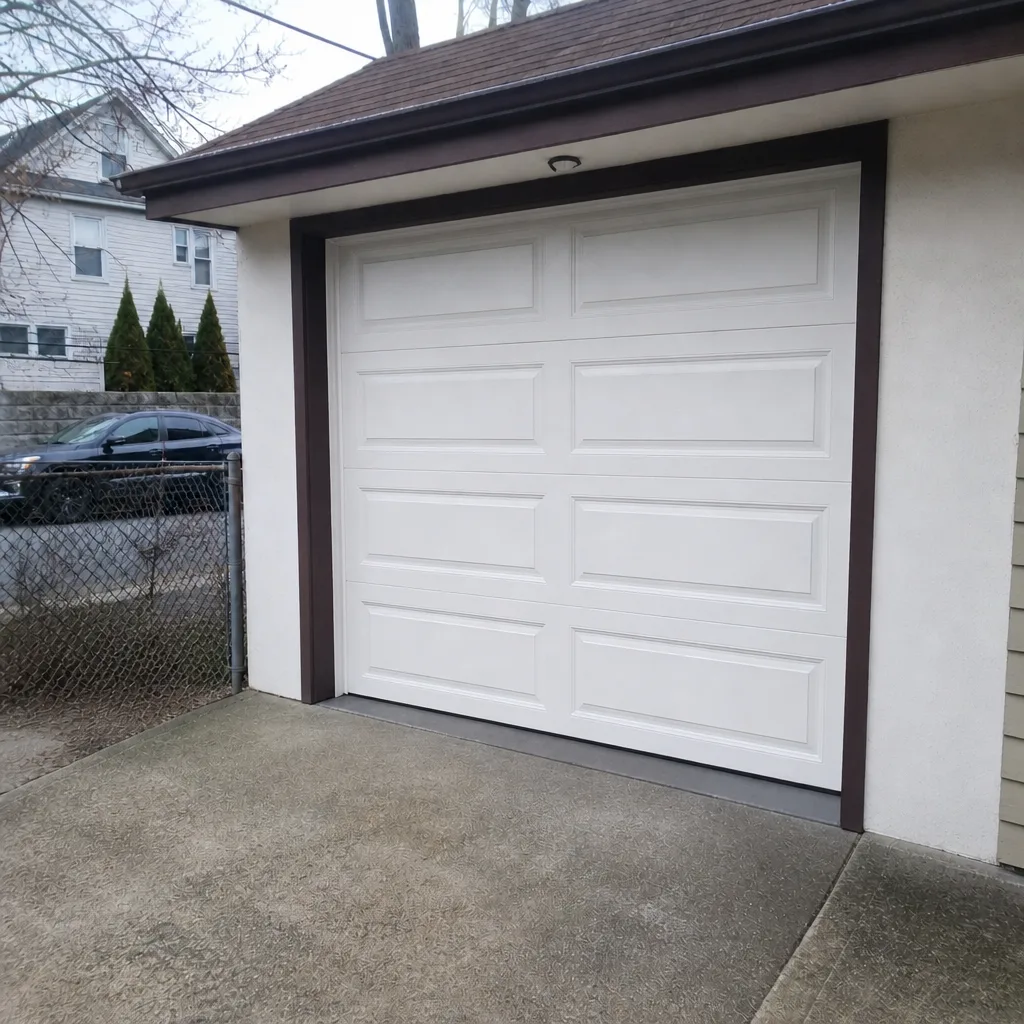
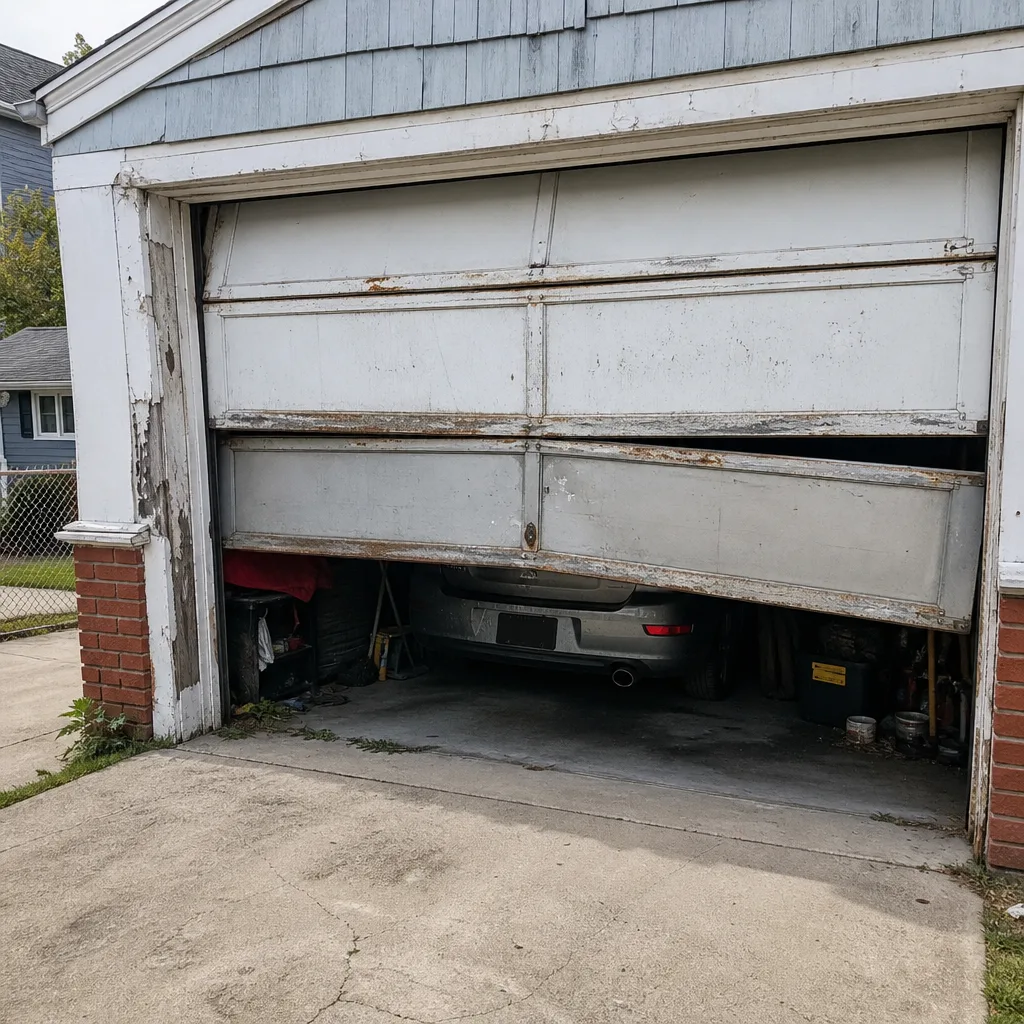
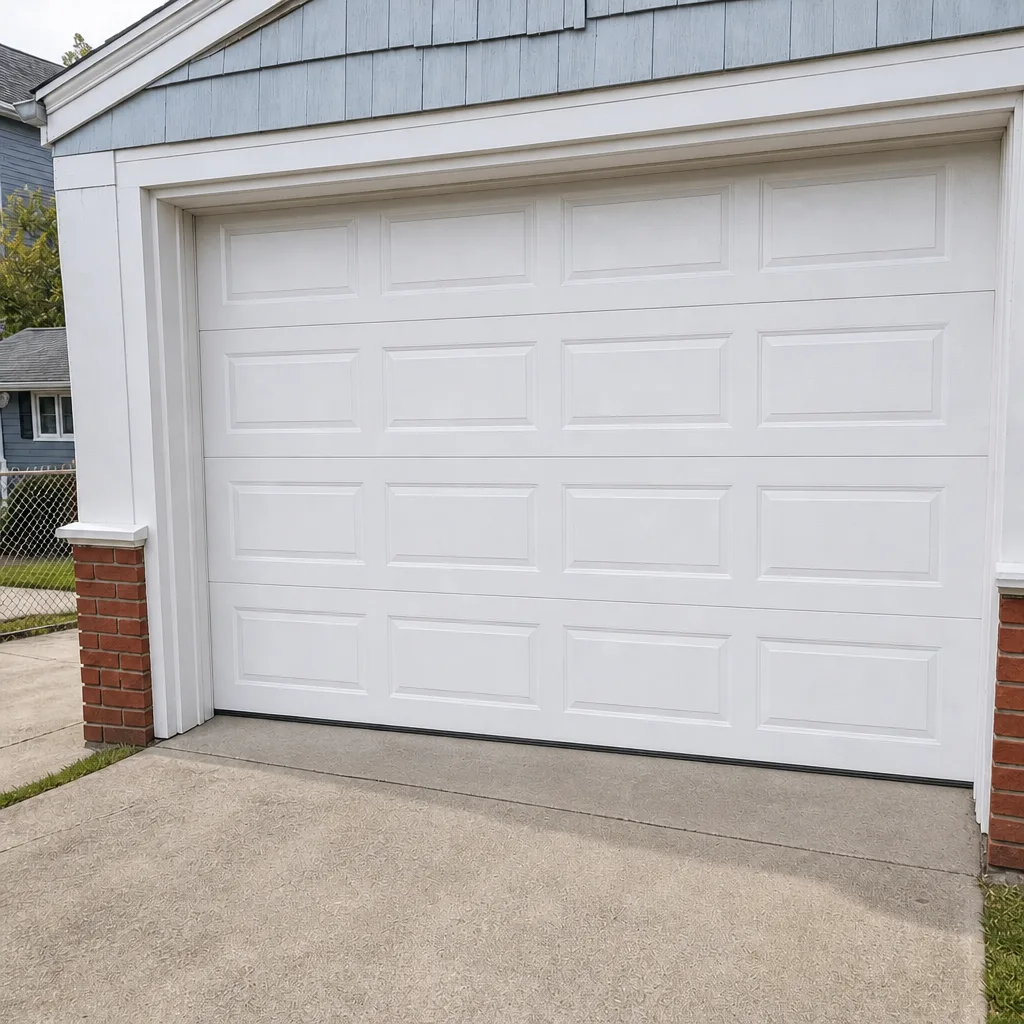
See the difference
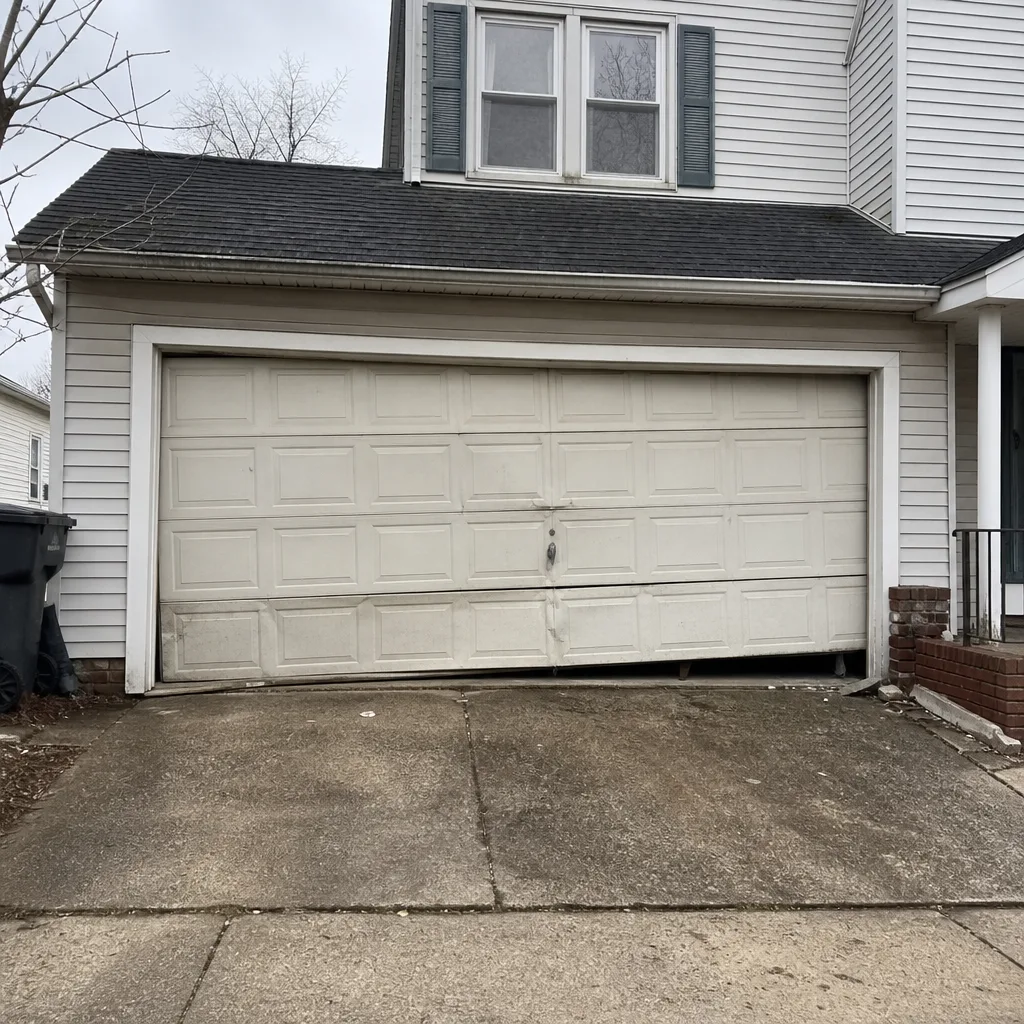 Before
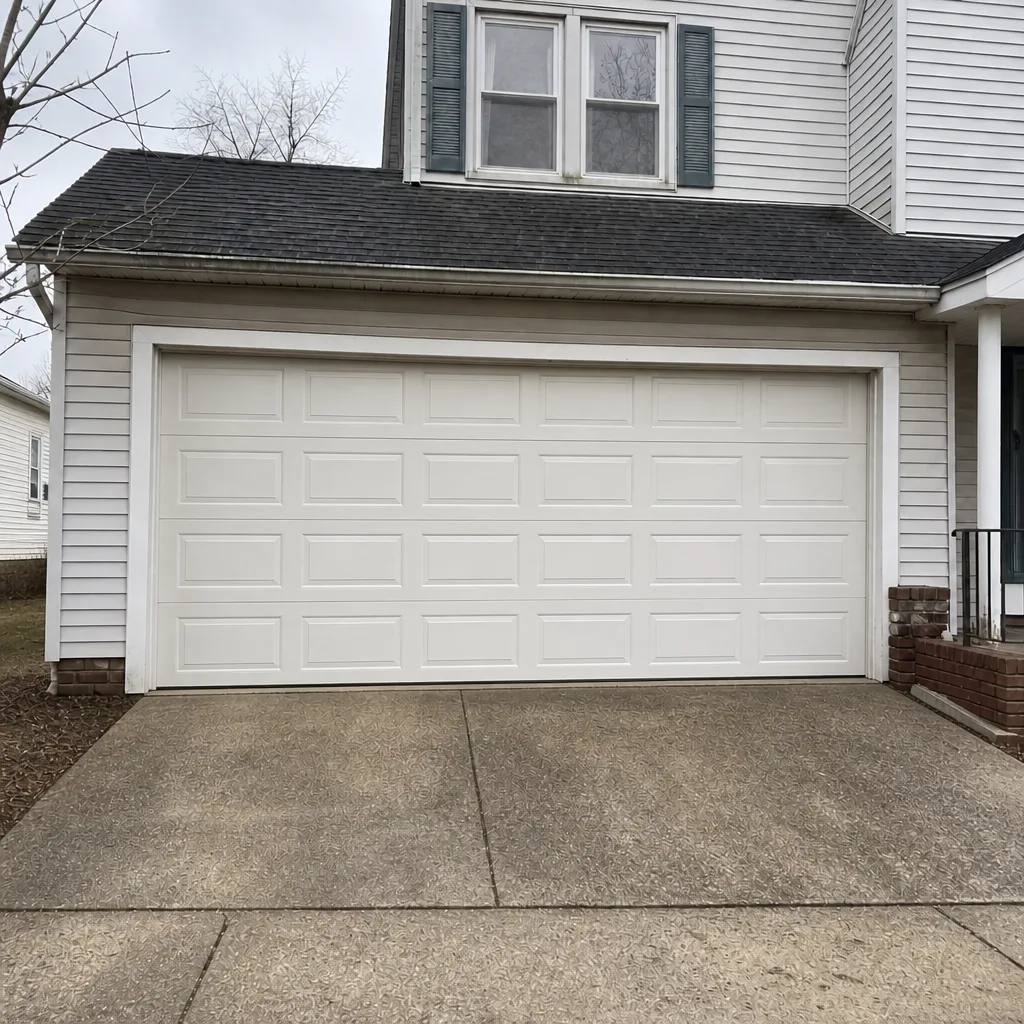 After
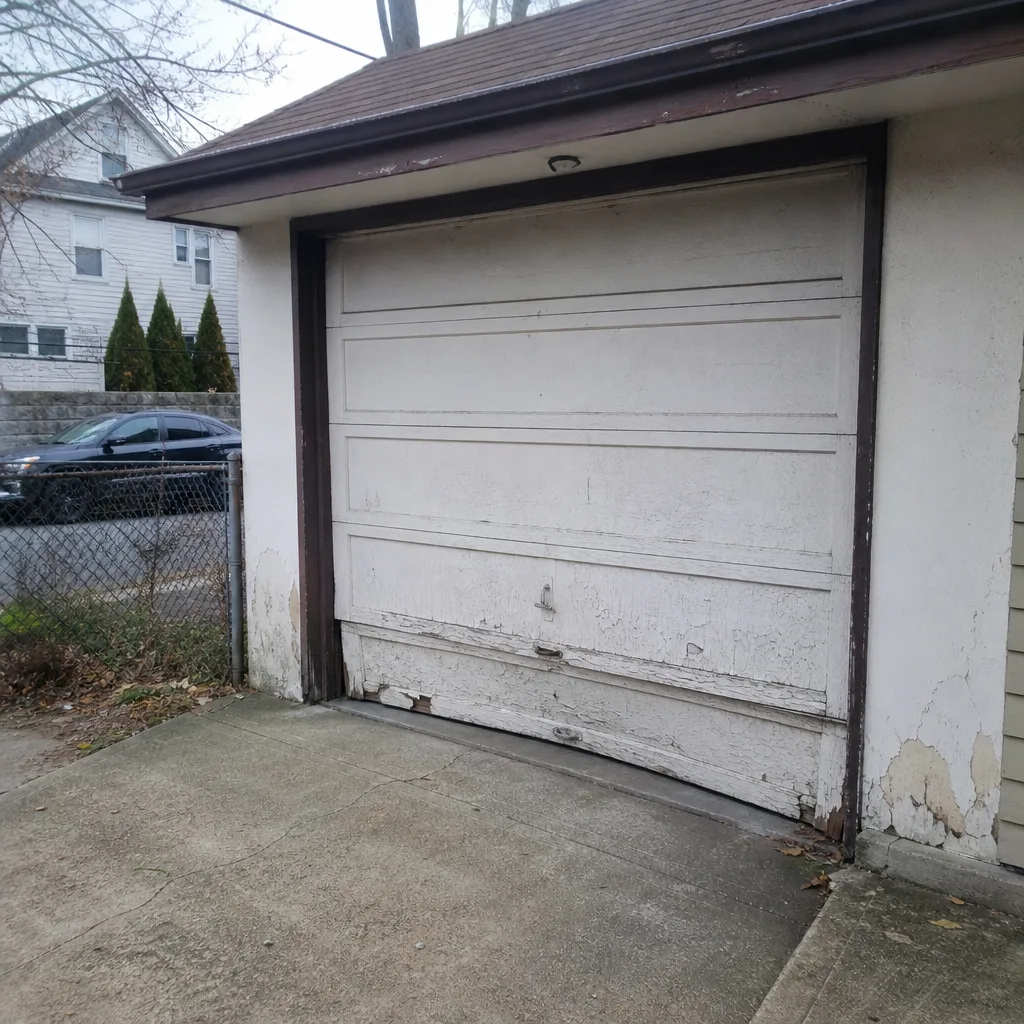 Before
 After
 Before
 After
When to Call a Professional
Some failures are maintenance, and some are a call for help. If your door has a broken spring, a frayed or slack cable, or a crooked hanging door, stop using it and call. If the opener reverses on its own, refuses to respond to the remote, or fails the safety-reverse test, that’s a call too. And if a panel or track is bent from an impact, that’s not a lubrication fix. Paterson Garage Door Repair Co offers free estimates in Paterson – call (844) 553-2327. We work on LiftMaster, Chamberlain, Genie, Clopay, Amarr, Wayne Dalton, Craftsman, and Raynor equipment, so we already know your hardware before we arrive. A technician can run the same checklist you’ve been running, spot what you can’t see from the ground, and quote the repair before any work starts. The written estimate sets the final price, so there’s no invoice surprise after the work is done.
Frequently Asked Questions
Twice a year for a full checklist, and a quick visual pass after any big storm. Late fall and early spring are the two key dates in Paterson because the freeze-thaw cycle does the most wear between those two points. If your door is older or on a building where the framing has shifted, an extra fall check on the tracks and hinges is worth the effort.
Yes, as long as the door is closed and the opener is disconnected, and you’re only applying grease to the outside of the coil. What you should never do is adjust, wind, or replace a spring; that’s a job for a technician with the right tools because of the stored energy involved. A dry, rusty spring is worth a call for garage door spring repair before it breaks. Call (844) 553-2327 for an estimate – it’s free.
Because cold contracts metal and thickens grease. As temperatures drop in Paterson, the clearances between rollers and hinges tighten, and grease that’s too heavy won’t circulate when the door moves. Fresh fall lubrication with the right product fixes most of it. If the noise persists after lubrication, a roller or hinge is worn and needs replacing.
A broken torsion spring shows a visible gap in the coil, and the door will usually feel heavy and won’t open evenly. A worn extension spring will look stretched. You may also hear a loud bang when a spring breaks. If you see or hear any of these, stop using the door and call – running the opener on a broken spring can snap a cable.
No. Tracks should stay clean and dry. Greasing them collects grit, dust, and hair, and turns into a sticky paste that drags on the rollers. Wipe them clean with a dry cloth and leave them alone.
Run the safety-reverse test. If the door doesn’t reverse when it hits a broom handle, the force or travel limits are out of adjustment, or the sensors are misaligned. If the opener reverses on its own, responds only occasionally to the remote, or makes grinding sounds, the internal parts are failing. Call (844) 553-2327 for a free estimate and a technician can tell you which it is.
The Bottom Line
Garage door maintenance comes down to matching the right lubricant to each component, running a simple 15-minute visual check twice a year, and testing the balance and safety-reverse function. The freeze-thaw cycle in Paterson makes fall lubrication and spring inspection especially important. Keep a log with photos and short videos so a technician can diagnose faster and you can spot unnecessary upsells. And remember: springs and cables are look-only. If you see a gap in a spring, a frayed cable, or a door that hangs crooked, stop using it and call a professional. The team at Paterson Garage Door Repair Co can run the same checklist, fix what’s failing, and quote the price before any work starts.
Written by the team at Paterson Garage Door Repair Co.