Garage Door Repair: Repair or Replace? How Paterson Homeowners Decide
Most homeowners in Paterson who call us about a broken garage door have already been told they need a new one. Sometimes that’s true. Often it isn’t. A company that only installs new doors will always find a reason your current door isn’t worth fixing, and the math they use isn’t wrong. It’s just incomplete, because it never accounts for what a proper repair actually costs. So here’s the framework we use ourselves, without the pressure. If you’d rather not climb into this yourself, call (844) 553-2327 and we’ll walk through it with you.
Key Takeaways
- Repair usually wins if the door is structurally sound and the damage is mechanical (springs, opener, rollers, hinges).
- Replacement makes more sense when panels are bent or rotted, the hardware is discontinued with no aftermarket supply, or the same component fails over and over.
- A 50% repair-to-replacement cost threshold is a starting point, not the whole decision. Door age and repeat failures change the math.
- Replacement quotes often leave out disposal, new tracks, and opener compatibility with a heavier door. Ask about all three.
- If a technician recommends a new door on the first visit without attempting a repair, that’s your cue to ask a direct diagnostic question.
What’s the 50% Rule for Paterson Garage Doors, and Where Does It Break Down?
If a repair costs more than half of what a full replacement would run, replacement is usually worth pricing out. That’s the 50% threshold, and it’s a sensible first filter. If a new door costs $1,800 and the repair quote comes back at $1,200, you’re right at the line and the door’s age should tip you. Below that line, repair almost always makes more financial sense.
Where the rule falls apart is the word “cost.” A repair estimate and a replacement estimate rarely measure the same thing. A repair quote pays for labor and parts on what’s already there. A replacement quote should include removal, disposal, new hardware, new tracks in many cases, and possibly a new opener tuned to the door’s weight. Strip out the extras from a replacement bid and that $1,800 door might be a $2,400 project. Strip them from a repair bid and it’s honestly $300 to fix a spring.
We build the comparison the other way around. Start with the realistic all-in replacement number, then decide whether a repair is genuinely less than half of that. In Paterson, where most homes sit on standard two- or three-car garages, that reframing changes the answer more often than you’d expect.
One more thing the rule ignores: whether the repair actually restores the door. A $200 patch on a dented panel isn’t the same as a fix that makes the door whole again. If the repair leaves you with a door that still doesn’t seal, still sticks, or still sounds wrong, you paid for half a solution.
When Does Replacement Actually Make Sense in Paterson?
Replacement is the right call in three specific situations, and we recommend it when those conditions are met. It’s not common, but when it’s true it’s true.
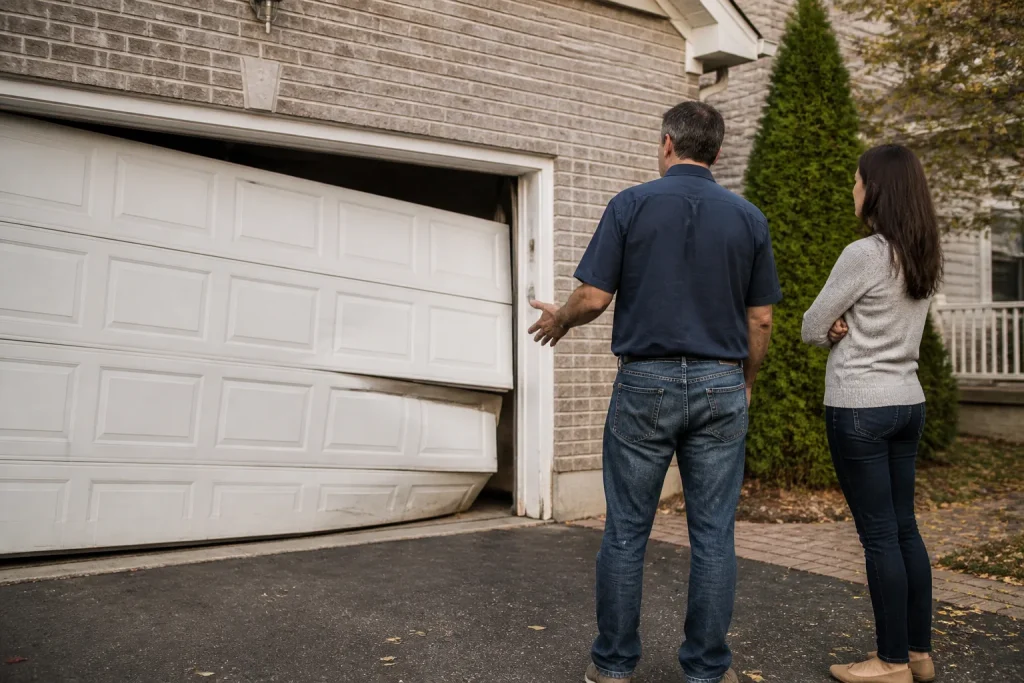
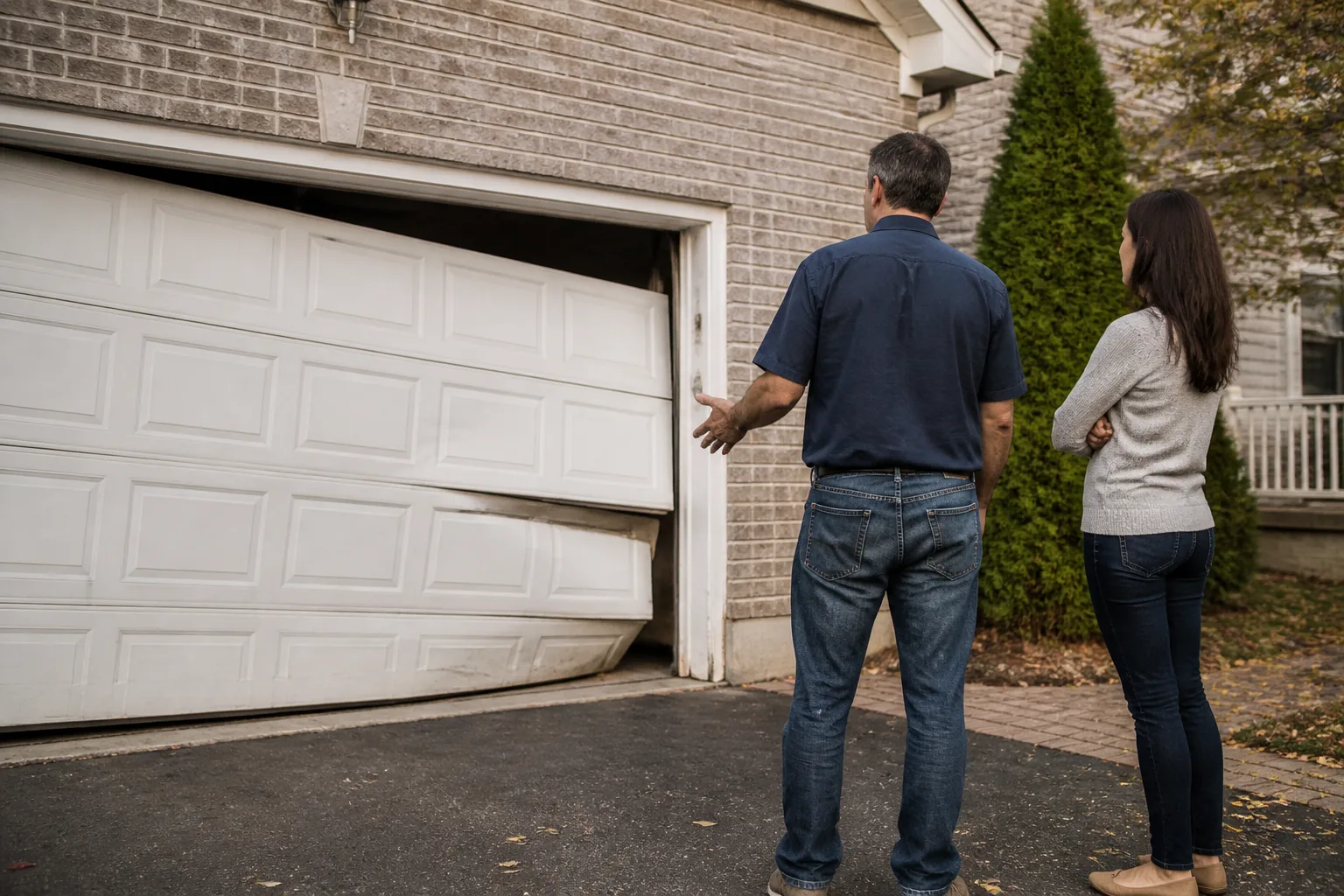
- Structural panel damage. A door that’s been hit by a car, dropped onto the ground, or bent at the panel seam is hard to straighten and often unsafe. The panels take the load of the springs and cables; a bent panel can bind and throw off the whole system.
- Discontinued hardware with no aftermarket supply. Some older doors used sectional or spring assemblies that no one makes anymore. You can sometimes source a substitute, but the labor starts to climb and the fit is never perfect.
- Repeated failures of the same component. If the same spring keeps snapping, or the opener keeps burning out, the problem isn’t the part. It’s the door’s weight, balance, or alignment, and no amount of repair will fix it permanently.
If any of those match what you’re dealing with, replacement is the honest answer. If none match, we start with repair. In Paterson, the majority of the calls we get fall into the latter group: a snapped spring, a poor-sealing bottom section, or an opener that isn’t lifting the door.
How Does Door Age Change the Repair-or-Replace Decision?
Door age matters, but not the way most guides suggest. Age alone doesn’t decide anything. What age does is widen or narrow the set of repairs worth trying.
A 12-year-old door with one broken spring is a repair. Full stop. Springs are wear items with a defined cycle life, so replacing them is routine maintenance, not a red flag. We’ve replaced a single torsion spring on a door that was otherwise solid and had years of service left. That’s not a band-aid. It’s the correct fix.
A 12-year-old door on its third spring in two years is a replacement conversation. That pattern doesn’t happen by chance. It usually means the door is out of balance, the cable drums are worn, or the door was sized for a lighter spring than it now carries. Replacing the spring a fourth time just repeats the cycle.
As a rough guide:
- One mechanical failure on an otherwise healthy door: repair, regardless of age.
- Two failures of different components within a few years: repair, and investigate whether the door needs balancing.
- Three or more failures of the same component: investigate system-level causes, and be open to replacement.
- Structural or cosmetic damage that keeps getting worse: replace.
Our technicians have up to 14 years of experience across these systems, and the pattern we trust isn’t the door’s age. It’s whether the door’s failures are isolated or repetitive. A 20-year-old door with one worn roller is a repair. A 10-year-old door that keeps eating springs is the interesting case.
What Do You Do When a Technician Pushes Replacement on the First Visit?
Ask a diagnostic question. Something like: “So repairs aren’t possible, or aren’t cost-effective?” That’s the moment a sales-driven recommendation and an honest assessment separate. An honest technician will tell you which components failed, why a repair doesn’t address them, and what the alternatives really are. A sales-driven recommendation will deflect or repeat the pitch.
Some follow-ups worth asking:
- “Which specific parts failed?” A real diagnosis names them. If it’s the spring, the opener, the rollers, and the bottom seal, that’s a different conversation than “the whole thing.”
- “Could a repair get me through a year?” Sometimes the honest answer is yes, even if the technician recommends replacement for a long-term fix. Both can be true.
- “What’s the all-in replacement number, including disposal, tracks, and opener compatibility?” If you get a figure that excludes those, it isn’t the full number.
You’re also entitled to a second opinion. In a trade where springs are the most dangerous part of any door, and where a mistaken recommendation costs you four figures, that second call is worth making. We’re happy to give you one. There’s no charge for the estimate and no obligation after it.
Related services in Paterson: garage door repair for a single failed part, and garage door spring repair if the spring is what let go.
What Hidden Costs Do Replacement Quotes Usually Leave Out?
Replacement quotes often look lower than they really are because three costs are quietly excluded. If you’re comparing numbers, ask about all of these.
- Disposal. Removing the old door and hauling it away is labor and a dump fee. Some bids include it, some add it after the fact.
- New tracks. New doors are sometimes a different weight or thickness, and the old tracks may not align cleanly. If the tracks need replacing, that’s a line item.
- Opener compatibility. A heavier or differently balanced door may need a different opener spring tension or, in some cases, a different unit altogether. An older Craftsman or LiftMaster opener rated for a lighter door may not lift a beefier replacement cleanly.
There’s also the alignment cost. A new door needs to be balanced against its weight, which takes time, and the new bottom seal may not match the concrete unless it’s specified. None of these are dealbreakers, but if your replacement quote doesn’t mention them, it’s not the full number.
The comparison you actually want is: full repair cost on the existing door, against full all-in replacement cost. If the repair comes in at a third to a half of the all-in number and the door is healthy, the repair is the smarter spend. We’ll give you both numbers so you can see them side by side.
When Should You Stop Thinking About It and Call a Pro?
When the door is stuck, when the spring has snapped, or when the opener runs but doesn’t lift. Don’t try to force a garage door that’s binding or won’t move, and don’t attempt to work on the springs yourself. They store serious force and can hurt you badly if they release unexpectedly. A trained technician has the tools, the knowledge of your specific hardware, and the safety practice to handle it. We cover garage door opener repair for the mechanical side, and we work on both the door and the opener, so you don’t need two vendors.
In Paterson, emergency calls are a big part of what we do. If your door won’t move, we’d rather you call than try to reason with it. We know most brands of hardware by sight: Craftsman, Raynor, LiftMaster, Chamberlain, and others from our eight-brand lineup. That saves time on the diagnosis and means the right parts arrive on the first visit, not the second.
For a lot of homeowners, the real answer is simpler than it feels: same door, fixed right. If the door is structurally healthy and the failure is a wear item, repair is the cheaper, faster, and genuinely good outcome. We’ll tell you that plainly, even when a replacement would pay us more.
The Bottom Line
Repair usually wins when the door is sound and the failure is mechanical. Replace when you have structural panel damage, discontinued hardware, or the same part failing over and over. Use the 50% rule as a starting filter, but reframe both numbers to include the full all-in replacement cost before you compare. Age matters as a pattern, not as a number. And if someone recommends replacement on the first visit without a clear diagnosis, ask which parts failed and whether a repair could get you through a year.
If you’re in Paterson and need help, Paterson Garage Door Repair Co offers free estimates. Call (844) 553-2327.
Frequently Asked Questions
Spring repair typically runs lower than a full door replacement, and it’s almost always the better spend on a structurally healthy door. The exact number depends on the spring type and access. Call (844) 553-2327 for a free estimate and you’ll get a written number before any work starts.
We can give you a working answer based on what you describe, but the honest call usually needs a look at the door and opener. We’ll never recommend replacement over the phone. Call (844) 553-2327 and we’ll book a free estimate.
No. We quote and agree the price before any work starts, and the written estimate sets the final number. If we uncover something that changes the scope, we stop and talk to you first. Call (844) 553-2327 for an estimate.
The local pro who performs the work is licensed and insured as the state requires. We connect you with vetted local professionals who do the job. Call (844) 553-2327 and we’ll get you scheduled.
Written by the team at Paterson Garage Door Repair Co.
Need Garage Door Help?
Call Paterson Garage Door Repair Co - the local pro we connect you with is licensed and insured, here with fast after-hours help in Paterson.
(844) 553-2327